2026 Best Curved Glass Guard Suppliers Worldwide
The 2026 Best Curved Glass Guard Suppliers Worldwide guide examines manufacturers that combine visual precision with dependable structural performance. Curved glass guard systems are not simply decorative barriers. They must manage impact resistance, edge quality, fixing accuracy, surface durability, and installation movement.
Structural-glass consultant Mark Meshulam has often stressed, “Glass is unforgiving; details decide safety.” This principle remains relevant when comparing suppliers. A graceful curve can hide uneven lamination, weak fittings, or poor alignment. Small errors matter.
This guide considers practical supplier experience, engineering support, testing documentation, production capacity, and project communication. It also looks at details buyers can physically inspect, including polished edges, consistent radius, clean interlayers, stainless-steel finishes, and concealed anchor connections. A supplier may present impressive showroom images, yet performance depends on tolerances and installation discipline.
The best Curved Glass Guard suppliers should explain their design assumptions clearly. They should provide suitable technical drawings, material specifications, maintenance guidance, and realistic delivery schedules. Regional support also matters, especially for large architectural projects with difficult access or changing site conditions.
Not every supplier fits every project. Some excel at bespoke hotel interiors, while others handle standardized commercial systems more efficiently. That distinction is easy to overlook. It deserves more attention.
This introduction sets a practical direction for the 2026 supplier comparison. Beauty remains important, but confidence comes from verified details, experienced teams, and evidence that survives close inspection.
Curved Glass Guard Basics: Tempered Glass Is 4–5× Stronger Than Annealed Glass
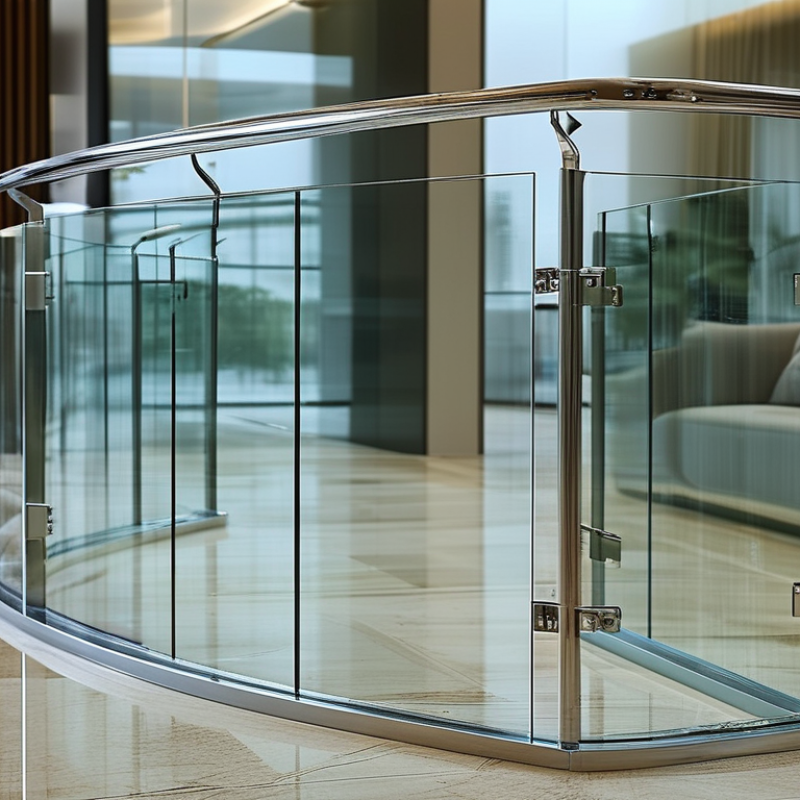
Curved glass guards rely on careful material selection, not appearance alone. Tempered glass is typically 4–5 times stronger in bending than annealed glass of the same thickness. This advantage comes from controlled heating and rapid cooling, which create surface compression. It helps the panel resist everyday impacts, wind pressure, and handling stress.
The 4–5× figure needs context. It does not mean every curved panel survives every impact. Thickness, radius, edge finishing, holes, hardware, and installation quality also matter. A small chip near an edge can become a serious weakness. During supplier reviews, request heat-treatment records, dimensional checks, and test reports for the exact glass configuration. Generic certificates may not prove performance for a curved guard.
Tempered glass breaks into small pieces when it fails. However, it may lose its barrier function immediately. Laminated tempered glass can hold fragments together through an interlayer, providing extra retention after breakage. This detail deserves attention in elevated walkways, balconies, and public interiors. Qualified suppliers should explain their bending process, inspect visual distortion, and confirm compatibility between glass, fittings, and seals. Some suppliers provide excellent panels but weak documentation. That gap is easy to overlook, and costly to correct.
Safety Standards: EN 12600, ASTM E2358, and 16 CFR 1201 Requirements
2026 Best Curved Glass Guard Suppliers Worldwide
Curved glass guards demand more than attractive geometry. Each supplier should prove compliance through tested assemblies, not glass samples alone. EN 12600 evaluates pendulum impact resistance. Its classifications use impact heights of 190, 450, and 1,200 millimetres. Higher classifications indicate stronger resistance under defined test conditions.
ASTM E2358 addresses permanent glass railing performance, including structural loads and component behavior. In the United States, 16 CFR 1201 requires safety glazing to pass impact testing under Category I or Category II conditions. Category II represents the more severe test level. Grand View Research reported that the global architectural glass market exceeded USD 75 billion in 2023, increasing pressure for faster, larger, and more complex installations. Growth alone does not prove safety. A curved panel may pass impact testing while its anchors, shoes, or handrail connections remain under-designed. That is an uncomfortable gap worth challenging.
Tips:
Request complete test reports, including glass thickness, curvature, supports, hardware, temperature, and failure results. Check whether the tested configuration matches the proposed site. Ask for engineering calculations and installation records. Small differences matter. Independent laboratory evidence is preferable to sales language. Suppliers should also explain edge finishing and replacement procedures, because damaged curved glass is rarely a simple field repair. Reported compliance should be traceable to the exact system supplied.
Global Supplier Landscape: Fabrication Capacity, Lead Times, and 2026 Regions
2026 Best Curved Glass Guard Suppliers Worldwide
The 2026 supplier landscape is shaped by fabrication capacity, not catalog size. Experienced manufacturers usually combine digital templating, CNC edgework, heat treatment, and controlled bending lines. A small hotel staircase may need only several panels, while a transport hub can require hundreds of repeatable units. Ask for monthly output by glass thickness, radius, and interlayer type. Capacity figures without these details can mislead.
Typical lead times range from four to twelve weeks after approved drawings. Complex radii, custom hardware, and testing requirements may extend schedules. Suppliers in East Asia often provide broad production capacity and competitive export logistics. European fabricators commonly offer strong engineering documentation and specialized architectural processing. North American suppliers can reduce inland delivery time for regional projects. Growing production networks in the Middle East may support local construction demand, though capacity varies widely between facilities.
A reliable purchasing process includes sample approval, radius verification, and a written tolerance schedule. Request recent production photographs, factory inspection records, and packaging details. Crates should protect glass edges from vibration and moisture during long transit. One overlooked issue is replacement planning. A single damaged panel can disrupt installation if no matching reserve is available. Published lead times are also optimistic sometimes; port congestion, remakes, or drawing changes can add weeks. Supplier evaluation should therefore compare proven output, communication quality, inspection routines, and realistic delivery buffers.
Supplier Evaluation: ISO 9001, Glass Testing, Certifications, and Warranty Terms
When evaluating curved glass guard suppliers, ISO 9001 is a useful starting point, not proof of quality. The ISO Survey 2022 recorded 1,265,216 ISO 9001 certificates across 189 countries. Ask for the certificate scope, audit date, and manufacturing site. A trading office certificate is not enough.
Certificates are not performance.
Request test reports for the exact glass build-up, radius, thickness, and interlayer. ASTM C1048-18 identifies minimum surface compression levels for heat-treated architectural glass. Also review fragmentation, heat-soak testing, impact resistance, and edge inspection records. For laminated guards, check interlayer adhesion and post-breakage behavior. Testing should match local guard-load requirements, not just general glazing standards.
Warranty terms often reveal supplier maturity. Confirm coverage for delamination, spontaneous breakage, seal failure, hardware corrosion, and coating defects. Ask whether replacement includes transport, installation, and site labor. Some warranties exclude poor drainage or unapproved cleaners. That clause matters. Keep batch numbers, inspection photos, and delivery records. A neat certificate folder can still hide weak edge finishing. I would not accept impressive documents without traceability. ISO certification proves a management system, while independent test evidence supports the product claim. Supplier evaluations should examine both.
Procurement Criteria: 10–12 mm Glass, Hardware Quality, Pricing, and Installation Support
Choosing a curved glass guard supplier requires more than comparing catalog photos. In commercial projects, 10–12 mm toughened or laminated glass offers a practical balance between stiffness, safety, and visual clarity. Confirm the glass specification, edge finishing, curvature tolerance, and test documentation before requesting a final quotation. Small measurement errors can create visible gaps or force expensive site adjustments.
Hardware quality deserves equal attention. Check stainless steel grade, fixing strength, drainage design, and compatibility with the supporting structure. Ask for drawings showing posts, clamps, channels, and concealed connections. Pricing should include packaging, transport, duties, replacement-risk allowances, and installation labor. A low unit price may hide weak hardware or incomplete site support. That is not always obvious.
Tips: Request a sample corner or small mock-up before mass production. Compare the quoted radius with the actual site radius. Require installation instructions, inspection records, and a named technical contact. Confirm whether the supplier provides site measurement, delivery protection, and installer training. Also, ask how damaged panels are replaced. This question is often missed.
Reliable suppliers explain limitations instead of promising every curve. They should communicate lead times clearly and provide traceable quality records. However, procurement teams should still verify certificates independently. Even experienced buyers can overlook access routes, floor tolerances, or local approval requirements. A careful checklist helps, but it cannot replace a competent site inspection.