2026 Best Mirror Wall Ideas for Home Decor and Design Inspiration?
The rising trend of "Mirror Wall" designs reflects a growing interest in innovative home decor. According to a recent report by the Home Decor Industry Association, nearly 70% of homeowners are considering mirror installations to enhance their spaces. These reflective walls not only create an illusion of space but also add a touch of elegance.
Interior design expert, Rebecca Hutton, believes, “A well-placed mirror wall can transform a room, making it feel larger and brighter.” Her insights highlight the strategic use of mirrors in enhancing ambient light and visual appeal. Homeowners have begun to grasp the potential of mirror walls, yet many still struggle with selecting the right placement and style.
Incorporating mirror walls can elevate decor, but it requires careful planning. Too many mirrors can overwhelm a space. Balancing aesthetics with functionality remains a challenge. The journey of mastering "Mirror Wall" design invites exploration and creativity. As trends evolve, the importance of thoughtful design cannot be overstated. Decorating with mirrors is an art, and navigating this space can be an enlightening experience.

Understanding the Aesthetic Value of Mirrors in Home Decor
Mirrors serve as a critical element in home decor, influencing both aesthetic and spatial dynamics. They reflect light, making rooms appear larger and brighter. In a small living area, a strategically placed mirror can create an illusion of depth. It adds a layer of sophistication, enhancing the overall ambiance. The style of the mirror frame itself can introduce different design elements, from modern minimalist to ornate vintage.
Incorporating mirrors into your home design requires thoughtful consideration. Overuse can lead to a chaotic atmosphere. For instance, a mirror wall in a narrow hallway can be overwhelming. Instead, consider using mirrors as statement pieces. A large, framed mirror above a fireplace can draw attention without complicating the space. Combining mirrors with art can also elevate the decor, providing both reflection and intrigue.
While mirrors enhance spaces, they can reveal imperfections. Dust and smudges become more noticeable. Regular maintenance is essential; a clean mirror is both practical and visually appealing. Additionally, reflective surfaces can sometimes clash with existing decor if not chosen carefully. Balancing the reflective quality of mirrors with softer textures can create harmony in your home.
2026 Best Mirror Wall Ideas for Home Decor and Design Inspiration
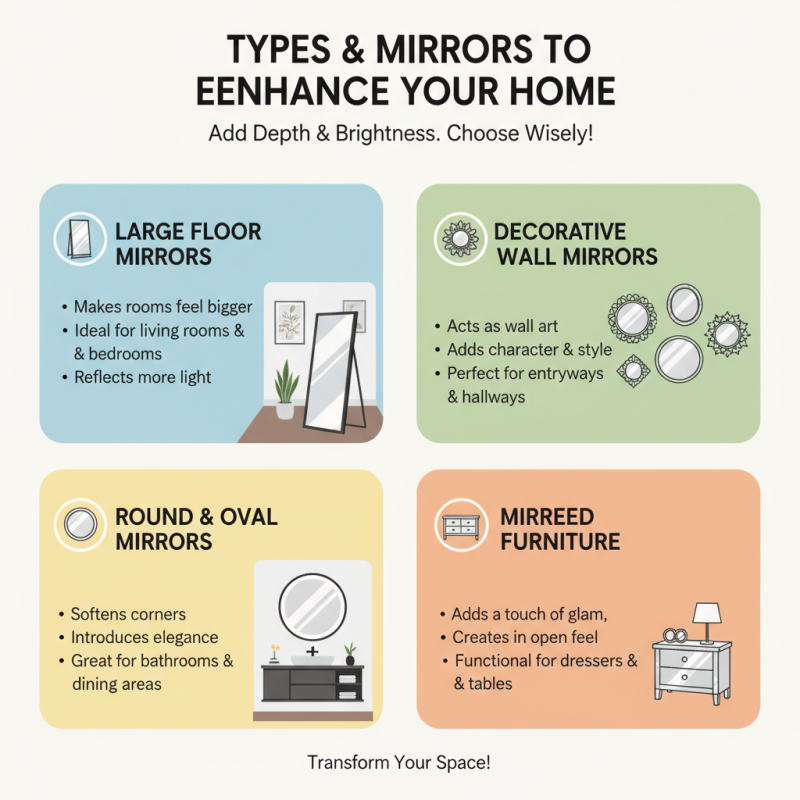
Types of Mirrors to Enhance Different Spaces in Your Home
Mirrors can transform any space in your home. They add depth and brightness. Choosing the right type of mirror is essential for enhancing your decor.
In the living room, large statement mirrors work well. They reflect light and create an illusion of space. Consider a round mirror above the sofa. This adds softness to the room. In contrast, a wall of smaller mirrors can create a modern collage. It’s bold, yet playful.
In the bedroom, choose mirrors that complement your design. A full-length mirror is practical. It invites a touch of elegance. For smaller spaces, a mirrored nightstand or accent piece might suffice. Remember, balance is key. Too many mirrors can create confusion. Reflect on what fits best with your existing decor before making a final decision.
Placement Strategies for Maximizing Light and Space with Mirrors
Mirrors are transformative tools in home decor, especially for maximizing light and space. They can reflect both natural and artificial light, creating an illusion of additional room and brightness. According to the Interior Design Association, properly placed mirrors can increase perceived space by up to 25%. This is particularly beneficial in small living areas.
Placement matters. Position a mirror across from a window to capture daylight. In narrow hallways, a long mirror can widen the space visually. In a dimly lit room, mirrors can multiply light sources, making the area feel more inviting. Research shows that strategic mirror installation can enhance a room's aesthetic appeal, but improper placement can lead to confusion and an overwhelming sense of clutter.
Don’t forget to consider the frame and style. A sleek, simple frame can add elegance, while a bold, ornate one can serve as a statement piece. Each choice influences the room's overall feel. Keep in mind that reflecting chaotic elements might detract from serenity. Thoughtful mirror design and placement can create a harmonious blend of style and function, encouraging a balanced atmosphere.
2026 Best Mirror Wall Ideas for Home Decor and Design Inspiration
| Room |
Mirror Type |
Placement Strategy |
Benefits |
| Living Room |
Full-length Mirror |
Place opposite a window |
Increases natural light |
| Dining Room |
Frameless Wall Mirror |
Center wall above buffet |
Enhances space & elegance |
| Bedroom |
Decorative Wall Mirror |
Above the dresser |
Adds depth and style |
| Hallway |
Round Mirror |
Midway on the wall |
Creates a focal point |
| Bathroom |
Mirrored Medicine Cabinet |
Above the sink |
Combines function & style |
Creative Mirror Frame Ideas to Match Your Interior Style
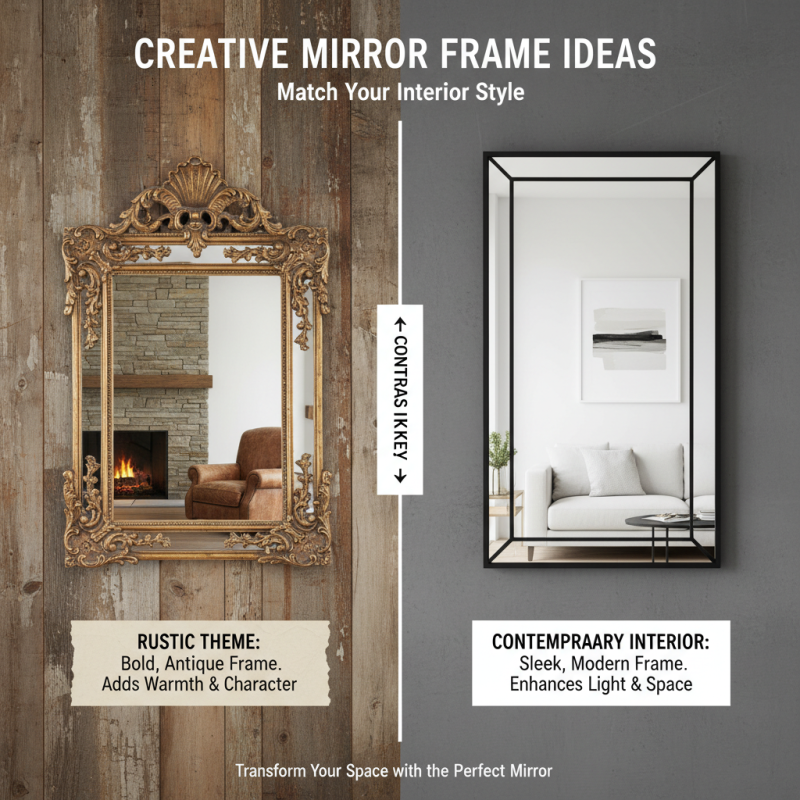
Mirrors can redefine your space, adding light and dimension. Choosing the right frame is crucial. A bold, antique frame can enhance a rustic theme. Meanwhile, a sleek, modern frame suits contemporary interiors well. The contrast between the mirror and the wall color can also create a striking visual effect.
Tip: Try different placements. A mirror near a window can reflect natural light. Place one above a console table for a stylish entryway. Using multiple mirrors in varying sizes can form a gallery wall that draws the eye.
Reflect on your needs. An oversized mirror can open a small room but may overwhelm a larger space. Consider how reflections affect your decor. Mirrors can distort shapes and colors, so test different angles. The right choice can elevate your interior while creating a sense of balance and harmony.
Tips for Creating a Cohesive Look with Multiple Mirrors in a Room
Mirrors can transform a room, adding depth and light. Using multiple mirrors creates a dynamic visual interest. However, achieving a cohesive look can be tricky. It’s essential to consider the shapes, sizes, and placement of each piece.
Start with a theme in mind. Whether you prefer modern, vintage, or eclectic styles, keep this consistent. For example, a series of round mirrors can create harmony. Varying the sizes encourages curiosity but stick to one finish. This unifies the mirrors, allowing individual pieces to shine without overwhelming the space.
Pay attention to placement as well. Position mirrors to reflect light, art, or beautiful views. Avoid clustering too closely; give each mirror room to breathe. Leave enough space between frames so that each piece stands out. This also helps in creating a balanced aesthetic. Consider functionality too. Mirrors should enhance your space, not clutter it. Think critically about each addition, and don’t hesitate to rearrange until it feels right.