How to Choose Smart Side Windows for Your Vehicle?
Choosing the right Smart Side Windows for your vehicle is essential. They enhance both aesthetics and functionality. These windows provide comfort and safety.
When selecting Smart Side Windows, consider materials carefully. Different options offer various levels of durability and UV protection. Think about your driving habits, too. Do you often park in direct sunlight? If so, look for windows that reduce heat buildup.
Another factor is the installation process. Ensure you can find professionals nearby. Poor installation can lead to leaks or existing damage. Remember, the right choice will impact your driving experience greatly. Balancing style and practicality is key. Additionally, review user experiences and testimonials. They often reveal unseen problems or advantages.
Understanding the Functionality of Smart Side Windows
Smart side windows are becoming increasingly popular in modern vehicles. They serve multiple functions beyond aesthetics. One crucial aspect is their ability to control light and temperature. By adjusting transparency, these windows can provide shade or allow sunlight in when desired. This contributes to a more comfortable driving experience.
Another significant functionality is energy efficiency. Smart side windows can help maintain a vehicle's internal temperature. This reduces the need for air conditioning, saving fuel. However, the technology isn't foolproof. Sometimes, settings might not respond immediately to driver commands. It can be frustrating when adjustments are required on-the-go.
In addition, there are safety considerations. While many smart windows claim to be shatterproof, they can still be vulnerable during an accident. It's essential to research and consider the materials used in production. Some drivers might find the initial investment in smart windows steep. But they need to weigh the long-term benefits against upfront costs. These windows are innovative, yet decision-making requires careful thought.
Factors to Consider When Selecting Smart Side Windows for Vehicles
When choosing smart side windows for your vehicle, several factors come into play. The materials used in the windows significantly impact their durability and energy efficiency. Look for options with strong, resilient coatings that can withstand harsh weather. The thickness of the glass also matters. Thicker glass usually offers better insulation and noise reduction.
Consider the level of tinting. Darker windows can provide privacy, yet they may limit visibility at night. A balance between aesthetic appeal and functionality is crucial. Don't forget about the smart features. Touch-sensitive, self-tinting, or even heated options enhance comfort but may add complexity. It's vital to evaluate whether these features align with your needs and driving habits.
Reflect on your local climate, too. In hot areas, smart windows can help control heat and glare, improving cabin comfort. However, they might require careful maintenance. Smart side windows can add value. But investing in the wrong type might lead to regrets later. Always weigh the pros and cons before making a final decision.
Types of Smart Side Window Technologies Available
Smart side windows are rapidly changing vehicle design. Various technologies are available, catering to different needs. These innovations enhance comfort, safety, and energy efficiency. According to a report by MarketsandMarkets, the smart glass market is expected to reach $4.5 billion by 2025. This indicates a growing interest in smart technologies in the automotive sector.
There are several types of smart side window technologies. Electrochromic windows change transparency with an electric current. This allows users to adjust visibility. Photochromic windows react to sunlight, automatically darkening in bright conditions. These options are great for reducing glare but may not always perform as expected.
Switchable films are another type. They allow users to control light transmission and enhance privacy. However, they often have a higher cost and variable durability. Research shows that integrating these technologies can increase a vehicle's energy efficiency by up to 30%, but they require careful consideration. Not every option suits every vehicle model. The choice often depends on individual preference and vehicle usage.
Benefits of Installing Smart Side Windows in Your Vehicle
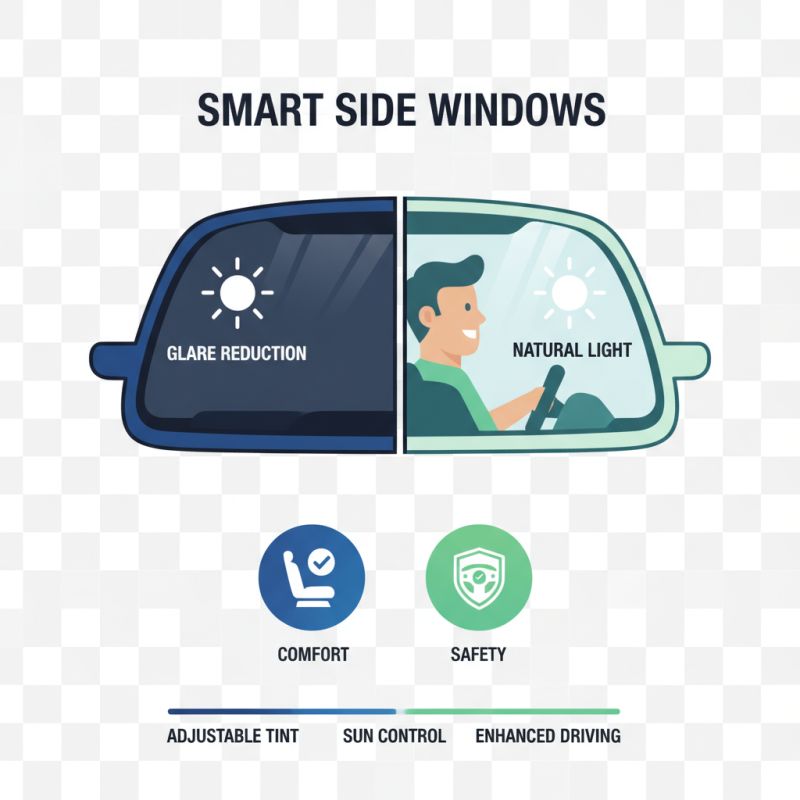
Smart side windows are becoming popular for many vehicle owners. They provide numerous benefits that enhance comfort and safety on the road. One primary advantage is their ability to adjust tint levels. This feature helps to control sunlight, making driving more enjoyable. You can enjoy natural light without experiencing discomfort from glare.
Moreover, these windows can contribute to energy efficiency. By regulating heat inside the vehicle, smart windows reduce the need for air conditioning. This can lead to lower fuel consumption and fewer emissions. Some might wonder about the installation process. It can be a bit complex, requiring professional assistance. This could raise concerns about cost or time.
Yet, the benefits often outweigh these challenges. Smart side windows can add modern aesthetics to your vehicle. They offer advanced technology features that can fascinate tech enthusiasts. However, like any technology, they might not work perfectly all the time. Sometimes, drivers experience issues, like slow response times. Recognizing and addressing these imperfections is key to maximizing their advantages.
Maintenance Tips for Keeping Smart Side Windows Efficient and Functional
Smart side windows can enhance your driving experience. However, keeping them functional requires regular maintenance. Here are some tips to keep your smart side windows efficient.
Ensure the sensors are clean. Dust and dirt can interfere with their operation. Use a soft microfiber cloth for gentle cleaning. Avoid using any harsh chemicals. They can damage the window’s surface. Regularly inspect the moving parts for wear. Lubricate them as needed to ensure smooth operation.
Check the window settings periodically. Sometimes, they may revert to default. Adjusting them can improve performance. If the window responsiveness decreases, it might need a software update. Consult your user guide for instructions. Lastly, keep an eye on the seals. They help maintain climate control and reduce noise. Worn seals can lead to leaks, which might require professional attention.