




In Dense Cities, How Does Fluted Glass Balance Light with Privacy?
Introduction: The Urban Dilemma of Light and Privacy
In super crowded city centers, architects and designers keep running into the same tricky problem: how to get tons of natural light into indoor spaces without giving up privacy from nearby buildings. This balancing act is getting more and more important as cities around the world get denser and denser. The answer might just be a cool, innovative material that’s both good-looking and super functional—fluted glass.
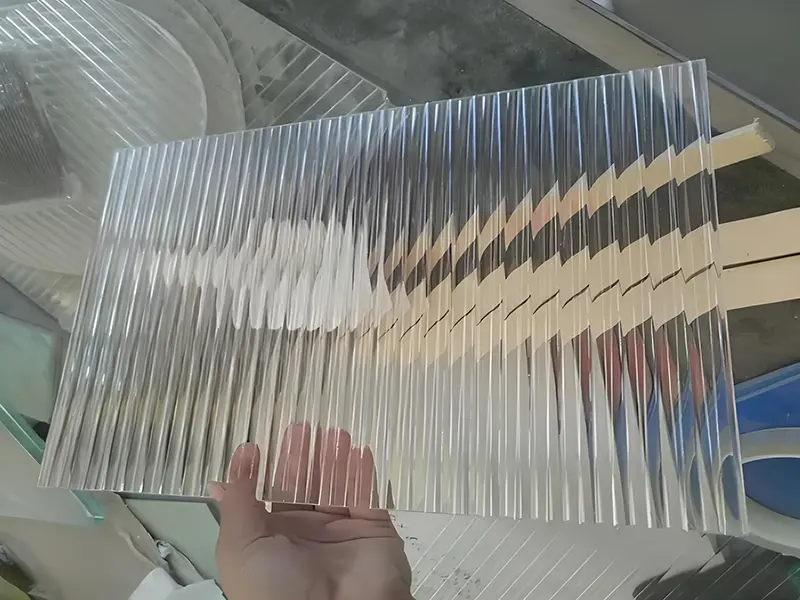
Also called ribbed glass or ridged glass, this building material has vertical grooves that give it a really unique look and texture. But it’s not just for decoration—those grooves are changing the game for how building exteriors handle that tricky mix of letting light in and keeping things private in busy urban areas. These days, with developers and architects trying to make the most of tiny urban spaces, there’s never been a bigger need for materials that check both boxes: style and practicality.

The Science of Visual Distortion: How Fluted Glass Works
Fluted glass operates on principles of light refraction and visual distortion to achieve its unique effects. Each groove in ribbed glass acts as a cylindrical lens, bending light as it passes through the material. This optical phenomenon diffuses direct sightlines while allowing light to penetrate deep into interior spaces.
The effectiveness of this system depends on several factors, including the depth and spacing of the ridges, the thickness of the glass, and the overall composition of the facade. Deeper ridges generally create greater visual obstruction while maintaining high light transmission. This sophisticated manipulation of light waves enables ridged glass to dissolve unwanted views into abstract patterns of color and shape, effectively creating a "veil" between interior and exterior environments.
The technical specifications of these glass products vary significantly based on their intended application. While standard grooved glass might feature uniform channels across its surface, custom solutions can incorporate varying groove densities and patterns to achieve specific visual and performance characteristics. The manufacturing process requires precise engineering to ensure consistent optical performance while maintaining structural integrity.
Beyond Aesthetics: Functional Benefits in Urban Settings
The application of fluted glass in dense urban environments delivers several advantages beyond its primary function of balancing light and privacy:
Thermal Performance: The layered nature of ribbed glass facades creates air pockets that act as natural insulators, reducing heat transfer and contributing to energy efficiency. This passive temperature regulation can significantly lower HVAC costs in high-rise buildings.
Structural Considerations: The corrugated profile of ridged glass provides enhanced rigidity compared to flat glass of equivalent thickness, allowing for larger spans and reduced supporting structures. This structural advantage enables more creative architectural expressions while maintaining safety standards.
Acoustic Mitigation: The textured surface of grooved glass helps to diffuse sound waves, providing a degree of noise reduction from bustling urban environments. While not a complete acoustic solution, this characteristic contributes to more comfortable interior environments.
Durability and Maintenance: The ribbed pattern of durable flat mirror glass variants helps to conceal minor imperfections and reduces the appearance of streaks or water spots, making maintenance less frequent and noticeable compared to completely smooth surfaces.
These functional benefits make fluted glass not just an aesthetic choice but a practical building solution that addresses multiple challenges of urban construction simultaneously.
Technical Innovations: The Evolution of Performance Characteristics
Recent advancements in glass manufacturing have expanded the performance capabilities of fluted glass far beyond its traditional applications. Modern variants incorporate specialized coatings that enhance their functional properties without compromising their distinctive appearance.
The integration of low-emissivity (Low-E) coatings has been particularly transformative. These nearly invisible metallic layers applied to ribbed glass surfaces help to regulate thermal transfer, rejecting solar heat in summer while retaining interior warmth in winter. This development has been crucial for improving the energy performance of largely glazed facades in extreme climates.
Similarly, the advent of durable flat mirror glass technology has enabled the creation of reflective grooved glass that bounces sunlight deeper into interior spaces while completely obscuring views from the outside. This innovation proves particularly valuable for ground-level spaces in dense urban areas where privacy concerns are most pressing.
Interlayer technologies have also advanced significantly. Laminated ridged glass with specialized resins between layers can provide additional sound insulation, ultraviolet filtering, and even enhanced security characteristics. These composite assemblies maintain the visual qualities of traditional fluted glass while offering performance parameters suited to contemporary building standards and regulations.
Sustainable Perspectives: Environmental Benefits and Considerations
The use of fluted glass aligns with several important sustainability objectives in urban development:
Daylight Optimization: By maximizing natural light penetration while controlling solar gain, ribbed glass reduces dependence on artificial lighting during daylight hours. Studies have shown that well-daylit spaces can reduce energy consumption for lighting by 60-80% in commercial buildings.
Material Efficiency: The inherent structural properties of grooved glass can lead to material reductions in supporting frameworks, contributing to more efficient structural designs and lower embodied carbon in building facades.
Longevity and Lifecycle: Durable flat mirror glass products are engineered for long service life with minimal maintenance, reducing the resource consumption associated with frequent replacements or cleaning regimens.
Adaptive Reuse Potential: The aesthetic neutrality and functional performance of fluted glass makes it suitable for various architectural styles, increasing the likelihood that buildings incorporating it will remain desirable and functional for longer periods, thus avoiding premature demolition.
As urban development increasingly prioritizes environmental responsibility, these sustainable characteristics make fluted glass an attractive option for projects pursuing green building certifications such as LEED, BREEAM, or Green Star.
Application Scenarios: Where Fluted Glass Excels in Urban Contexts
Several specific urban scenarios demonstrate the particular value of fluted glass in balancing light and privacy:
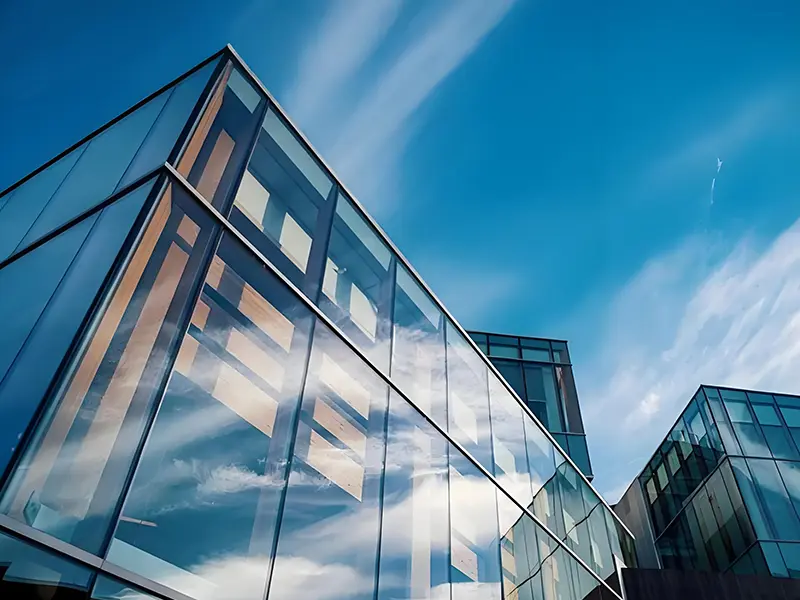
Zero-Lot-Line Conditions: In extremely tight urban sites where buildings rise directly along property boundaries, ribbed glass creates light-filled interiors while preventing direct views into adjacent properties.
Street-Level Commercial Spaces: Retail and restaurant spaces benefit from the "see-through-but-not-see-into" quality of grooved glass, creating inviting, light-filled environments that maintain display privacy after hours.
Multi-Unit Residential Buildings: For apartment complexes where units face each other across narrow courtyards or light wells, ridged glass balconies and facades provide residents with privacy without sacrificing their connection to natural light.
Healthcare and Wellness Facilities: Spaces requiring both abundant natural light and visual privacy, such as therapy rooms or recovery areas, benefit from the calming, diffused quality of light provided by fluted glass.
Cultural and Institutional Buildings: Museums, galleries, and libraries use durable flat mirror glass to control light levels while creating distinctive architectural expressions appropriate to their civic function.
In each of these scenarios, the strategic application of fluted glass addresses the specific challenges of dense urban construction while contributing to the overall architectural concept.
Future Directions: Emerging Trends and Possibilities
The evolution of fluted glass continues as material science and digital fabrication technologies advance. Several promising developments point toward future applications:
Dynamic Variability: Research into responsive materials suggests future iterations of ribbed glass that could alter their transparency or light-directing properties in response to environmental conditions or user preferences.
Integrated Photovoltaics: The development of thin-film solar technologies that can conform to textured surfaces may allow grooved glass to generate electricity while performing its primary functions of light management and privacy control.
Enhanced Environmental Response: Next-generation ridged glass may incorporate more sophisticated environmental parameters in its design, with groove patterns specifically calibrated to a building's orientation, solar exposure, and specific privacy requirements.
Biophilic Design Integration: As evidence grows for the health and wellness benefits of connecting building occupants to nature, fluted glass is being studied for its ability to create dappled light effects that mimic natural environments like forests.
These emerging applications demonstrate that the potential of fluted glass extends far beyond its current uses, pointing toward a future where building envelopes become increasingly responsive and multifunctional.
Conclusion: Rethinking Transparency in the Urban Fabric
Fluted glass represents more than just a specialized building material—it embodies a sophisticated approach to one of fundamental challenges of urban design: how to create connections to the outside world while establishing necessary boundaries. As cities grow denser and the value of both natural light and personal privacy increases, the delicate balance achieved by ribbed glass becomes increasingly valuable.
The continued evolution of grooved glass technologies promises even greater integration of aesthetic and performance characteristics, potentially transforming building facades from static barriers into responsive interfaces. The growing capabilities of durable flat mirror glass suggest future applications where visual qualities can be precisely tuned to specific functional requirements.
In the ongoing conversation about how to make cities more livable, sustainable, and beautiful, materials like fluted glass offer a compelling answer. By rethinking the very nature of transparency in the urban fabric, this versatile material helps create environments that are simultaneously open and protected, connected and private, luminous and serene—proving that in the complex ecology of the city, we need not choose between light and privacy, but can enjoy the best of both.