





Is Bullet Proof Glass a Cost or an Investment? Calculating the True Value of Security
Introduction: Redefining Security Expenditure
In the evolving landscape of security and architectural design, executives and facility managers often face a critical question: are protective measures like bullet proof glass merely an upfront cost that strains the budget, or are they a strategic, long-term investment that safeguards an organization's most valuable assets—its people and capital? The distinction between a cost and an investment lies in the return it generates. This article just takes you straight into the awesome, cutting-edge world of modern bulletproof tech! It argues that getting top-quality bulletproof windows is a super wise move for the long haul. They keep things running without a hitch, make sure everyone stays safe, and even give your brand's image a nice boost. In the end, the benefits you get are way bigger than what you initially spend.

Beyond the Price Tag: The Multifaceted ROI of Bullet Proof Glass
The initial purchase and installation price of bullet proof glass is the most visible figure, but true cost-calculation must consider the broader financial implications of not having it. A security breach, whether an armed robbery, an attempted break-in, or an act of targeted violence, carries staggering costs: business interruption, massive insurance deductibles, potential legal liabilities, physical asset loss, and devastatingly, human casualties.
Modern bulletproof windows are engineered to mitigate these risks entirely. They are a passive, always-on security system that requires no power, minimal maintenance, and stands ready 24/7. The Return on Investment (ROI) is calculated not in revenue generated, but in catastrophic losses prevented. This makes bullet proof glass a capital expenditure that directly insulates the organization from future financial volatility and crisis management expenses, transforming it from a simple line-item cost into a foundational component of enterprise risk management.
The Technology Behind the Shield: More Than Just Thick Glass
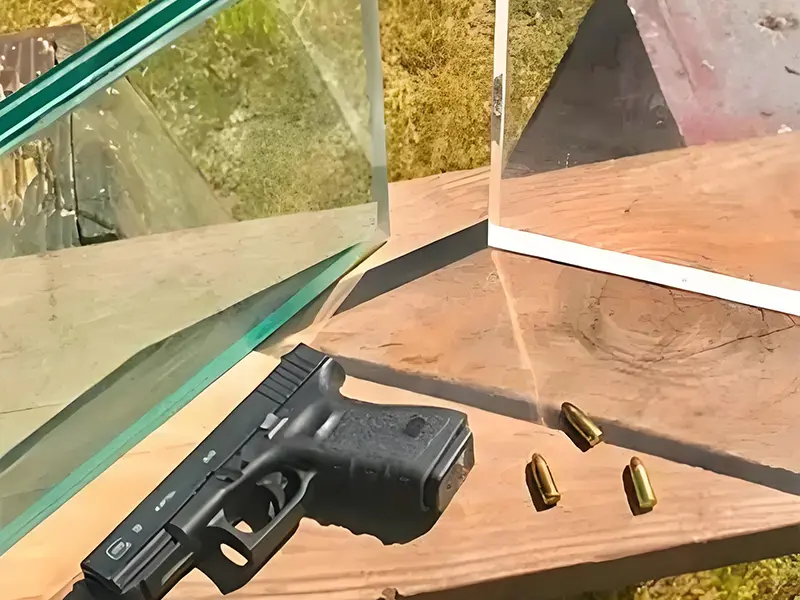
Understanding the investment value requires a look under the hood. Contemporary bullet proof glass is a marvel of materials engineering, typically constructed as a laminated composite. It alternates between layers of glass and polycarbonate (a incredibly strong thermoplastic), bonded under immense heat and pressure. This structure is key to its performance.
Upon impact, the glass layer on the outside shatters, absorbing and dispersing a significant portion of the bullet's energy. The flexible, adhesive interlayer then deforms, further absorbing energy. Finally, the tough polycarbonate layer acts as a catch, preventing penetration and containing the spall (glass fragments) that can cause serious injury. The level of protection, rated by standards like UL 752 in the US and EN 1063 in Europe, can be tailored to specific threats, from handguns to high-powered rifles. This technical prowess ensures that the investment is backed by proven, reliable science.
The Convergence of Threats: Integrating Bullet Proof and Fire Proof Glass
A truly holistic security strategy addresses multiple threat vectors simultaneously. This is where the integration of bullet proof glass with fire proof glass becomes a powerful, value-added proposition. Traditionally, these were separate products serving separate functions. However, the latest industry innovations have led to the development of hybrid solutions that offer both ballistic resistance and fire ratings.
This dual-purpose material is a superior investment. For building owners, it simplifies specification and procurement. For occupants, it provides unparalleled safety—protection from forced entry and ballistics, combined with critical containment of fire, smoke, and toxic fumes for a specified duration (e.g., 60, 90, or 120 minutes). Investing in a multi-hazard glazing system eliminates the need for separate protective measures, streamlining costs and enhancing overall building integrity. It represents the future of comprehensive architectural security.
Applications: Where the Investment Pays Dividends
The value of bullet proof glass is realized across a diverse range of sectors:
Financial Institutions: Banks and currency exchanges are classic examples. Bulletproof windows at teller stations not only prevent theft but also create a palpable sense of safety for employees and customers, directly impacting employee retention and customer confidence.
Retail & Luxury Goods: High-end stores are prime targets for smash-and-grab robberies. Ballistic glazing protects valuable inventory and deters criminal activity, ensuring business continuity.
Corporate & Government Buildings: Entryways, reception areas, and executive offices in sensitive industries can be fortified. This protects proprietary information, secures critical infrastructure, and safeguards leadership.
Educational & Healthcare Facilities: In an era of heightened concern for public safety, schools and hospitals are investing in bulletproof windows for main entrances and vulnerable areas. This investment directly protects students, patients, and staff, fulfilling the institution's duty of care.
Residential Security: For high-profile individuals or those residing in high-risk areas, installing bulletproof windows in homes is the ultimate investment in family safety and peace of mind.
In each scenario, the common thread is the preservation of normal operations and the absolute protection of human life—a return that is fundamentally incalculable.
The Intangible Returns: Brand Reputation and Peace of Mind
The financial calculus is only part of the story. The intangible returns on an investment in bullet proof glass are equally powerful. A company that visibly prioritizes security strengthens its brand reputation as a responsible, stable, and trustworthy entity. It signals to clients, partners, and investors that the business is managed with foresight and prudence.
For employees, working behind bulletproof windows in a high-risk environment significantly reduces anxiety and stress. This fosters a more productive, focused, and loyal workforce, reducing turnover costs. The "peace of mind" factor—for business owners, employees, and customers alike—is a tangible asset that, while difficult to quantify on a balance sheet, is a core component of the product's long-term value.
Conclusion: An Indisputable Investment in a Secure Future
To view bullet proof glass through the narrow lens of a per-square-foot cost is to misunderstand its fundamental purpose. In today's world, where threats are dynamic and the cost of complacency is astronomically high, it is a critical investment in resilience. It is a durable, long-life asset that protects physical assets, ensures business continuity, mitigates monumental liability risks, and, most importantly, creates an environment where people can work, learn, and live without fear.
The question is not "Can we afford to install bullet proof glass?" but rather, "Can we afford not to?" When the true value of security is calculated, the answer becomes clear: it is one of the most strategic and responsible investments an organization can make.