What Is the Best UV Protection Glass for Global Buyers?
Choosing the best UV Protection Glass is not a simple matter of selecting the darkest window. Global buyers must balance ultraviolet control, visible daylight, solar heat, durability, and cost. The right specification changes with climate, building orientation, interior materials, and local installation practice.
The International Commission on Illumination defines ultraviolet radiation as wavelengths from 100 to 400 nanometres. UVA occupies 315–400 nanometres, while UVB covers 280–315 nanometres. These bands affect skin, plastics, fabrics, artwork, and wood differently. IARC’s Global Cancer Observatory estimated more than 1.2 million non-melanoma skin cancer cases worldwide in 2022. The figure highlights UV exposure as a serious design consideration, not merely a comfort issue. However, glass selection still requires measured performance. Standards such as EN 410 and NFRC 200 help compare solar transmittance, visible transmittance, and solar heat gain. Manufacturer test reports should identify coating type, glass thickness, laminated interlayer, and tested wavelength range.
There is no universal “best” glass. Clear laminated glass can provide strong UV reduction while preserving daylight. Low-emissivity coatings may improve thermal performance, but their UV results vary by product and configuration. Tinted glass can reduce glare, yet it may lower natural light more than expected. A promising specification sheet is not enough. Buyers should request independent test evidence and evaluate sample panes under real lighting. Small details matter, including edge sealing, frame compatibility, and installation damage. The imperfect truth is simple: the best solution may be the one that protects interiors without making occupants switch on lights all day.
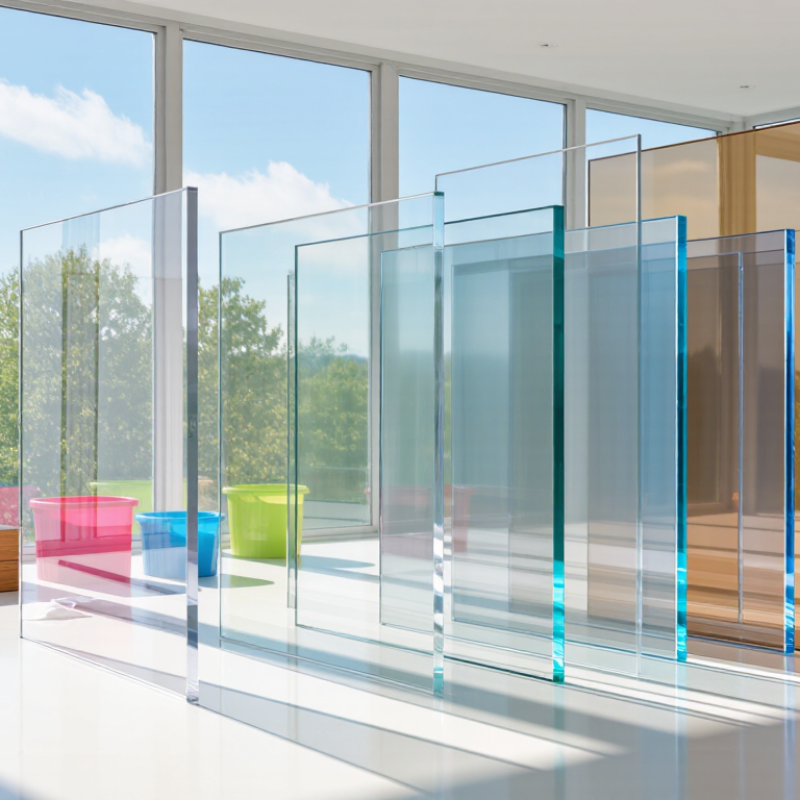
UV Radiation Basics: The 100–400 nm Spectrum and Building Risks
What Is the Best UV Protection Glass for Global Buyers?
Ultraviolet radiation occupies the 100–400 nm range.
UVC spans 100–280 nm and is mostly filtered by the atmosphere.
Buildings mainly face UVA and UVB exposure.
UVA covers 315–400 nm and reaches deeper into materials. UVB covers 280–315 nm and carries higher energy.
Both wavelengths can fade fabrics, dry timber, and weaken coatings.
Small wavelengths, serious effects.
A clear window may still transmit substantial UVA. Direct sunlight can discolor flooring near a glass wall within months. UV exposure may also embrittle sealants, plastics, and polymer interlayers.
Glass selection should begin with measured UV transmittance, not appearance.
Reliable suppliers should provide independent test data, technical drawings, and installation guidance. Ask whether testing covers the complete glass unit, not only one layer.
Numbers matter more than color.
Global buyers should consider latitude, façade direction, glazing size, and local climate. East- and west-facing windows often receive intense low-angle sunlight.
Laminated glass can improve UV control, safety, and acoustic performance.
Coated glass may also reduce solar heat, but performance depends on the whole assembly.
A darker pane is not automatically safer. I once assumed visible tint indicated strong UV protection; that assumption was weak.
Rechecking certified data remains necessary, especially when interlayers, sealants, or frames change during production.
Laminated Glass: PVB Interlayers Typically Block Over 99% of UV
For global buyers, laminated glass is a strong choice when ultraviolet protection matters. Its PVB interlayer typically blocks over 99% of UV radiation below 380 nanometres. This performance is reported in technical data from the Glass and Glazing Federation and aligns with testing methods described in ISO 9050. The result is practical: furniture, artworks, flooring, and fabrics receive less exposure near sunny windows.
Protection is not only about the interlayer. Glass thickness, edge sealing, installation quality, and the surrounding frame can affect real performance. EN 410 provides a recognized method for measuring light and solar properties, helping buyers compare technical declarations more reliably. Ask suppliers for tested UV-transmission values, not just marketing percentages. Check whether testing covers the complete glass build-up.
Details matter.
In field inspections, visible fading is often blamed on glass alone. That is incomplete. Heat, humidity, artificial lighting, and material dyes also influence discoloration. PVB laminated glass reduces one major cause, but it cannot stop every aging process. Buyers should also examine long-term durability records, climate suitability, and compatibility with glazing seals. A high-performing specification can still disappoint when installation is careless or the selected interlayer does not match the project’s exposure conditions.
Glass Type Comparison: Laminated, Tinted, Low-E, and Solar-Control Glass
Choosing the best UV protection glass depends on climate, window direction, and indoor priorities. Laminated glass uses a clear interlayer that can block most ultraviolet radiation. It also holds fragments together after breakage, which adds practical safety. However, it may not control indoor heat as effectively as coated glass.
Tinted glass absorbs sunlight and reduces glare, but darker appearance does not automatically mean stronger UV protection. Confirm the tested UV transmission. Low-E glass uses a thin coating to reduce heat transfer. It can support year-round comfort, although its UV performance varies by coating design. Solar-control glass is often better for large, sun-facing windows because it limits solar heat and glare. Some products combine solar control with Low-E performance.
Tips: Ask for UV transmission, solar heat gain, visible light, and thermal-value data. Compare the same test standards. Check the glass after installation, especially near edges and frames. A technically strong pane can perform poorly with unsuitable framing or poor sealing. I have seen buyers focus only on tint color and overlook orientation. That choice can create a dim room without solving heat gain. Not always. For global projects, request independent test reports and confirm performance under the local climate. A coastal apartment, a desert office, and a shaded home need different glass strategies.
Performance Verification Through EN 410, ISO 9050, and ASTM E903
Choosing the best UV protection glass requires more than reading a low-transmission percentage. Global buyers should examine verified data from EN 410, ISO 9050, and ASTM E903. These standards reveal how glazing controls ultraviolet, visible, and solar radiation under defined testing conditions.
EN 410 helps evaluate luminous transmittance and solar properties, including ultraviolet-related performance. ISO 9050 provides a consistent method for measuring light, solar, and UV transmittance. ASTM E903 uses spectrophotometric testing across a broad wavelength range, often from about 300 to 2,500 nanometres. This range helps expose weak points that one single UV figure may hide.
Ask for the complete spectral curve, not only a headline result. Check the glass thickness, laminate structure, test angle, and measurement temperature. A sample may perform differently after adding an interlayer or coating. I have seen product comparisons become misleading when laboratories used different sample constructions. That detail matters.
Look for reports from competent, independent laboratories with calibrated instruments and clear uncertainty statements. Compare UV transmittance near the ultraviolet boundary, then review visible light and solar heat data together. Strong UV blocking can reduce daylight, but excessive darkness may create practical problems indoors. No test replaces installation experience. Frames, edge seals, scratches, and incorrect orientation can weaken real-world performance. Buyers should treat standards as reliable evidence, not a perfect prediction of every building condition.
Global Selection Criteria: VLT, SHGC, Climate, Durability, and Codes
Choosing the best UV protection glass starts with measurable performance, not a darker appearance. The National Fenestration Rating Council defines visible light transmittance (VLT) as the daylight percentage passing through glass. A low VLT can reduce glare, but it may create a gloomy interior. The U.S. Department of Energy reports that windows can contribute 25–30% of residential heating and cooling energy use. Therefore, VLT should be balanced with solar heat gain coefficient (SHGC), not selected alone.
Climate changes the decision. In hot regions, lower SHGC glass can reduce cooling demand near sun-exposed façades. In colder climates, moderate solar gain may support passive heating. The Lawrence Berkeley National Laboratory’s International Glazing Database provides measured optical and thermal properties for comparative specification. For UV control, laminated glass commonly blocks more than 99% of ultraviolet radiation below approximately 380 nanometers, depending on the interlayer and test method. That figure requires verification.
Durability also matters during global procurement. Ask for accelerated aging results, edge-seal performance, and compliance with ISO 9050 or EN 410 testing methods. Coastal buildings need stronger resistance to humidity and salt exposure. High-altitude projects deserve careful solar-load assessment. Local codes may reference ASHRAE 90.1, regional energy standards, or safety-glazing rules, so one specification cannot fit every market. No glass is perfect. Even experienced buyers can overvalue UV rejection and overlook glare, condensation, or replacement access. A practical schedule should list VLT, SHGC, UV transmission, U-value, thickness, safety classification, and tested durability.