China Top Curved Glass Guard Manufacturer?
Choosing a China Top Curved Glass Guard Manufacturer requires more than comparing prices or polished product photos. It demands practical experience with curved glass, metal fittings, installation conditions, and long-term safety expectations. A reliable manufacturer should explain how each guard is designed, tested, packed, and supported after delivery. Details matter. Look for accurate measurements, smooth curved edges, stable brackets, and clear inspection records.
A capable Curved Glass Guard supplier understands that every project has different requirements. A hotel staircase may need a softer radius and discreet stainless-steel hardware. A balcony may require stronger wind resistance, secure anchors, and weather-resistant finishes. Experienced engineers can review drawings, confirm glass thickness, and identify installation risks before production begins. This process reduces costly adjustments at the site.
Still, no manufacturer is perfect. Designs may need revision. Measurements can be misunderstood. Even experienced teams should welcome questions and independent checks. That honesty builds trust. It also reflects professional responsibility.
When reviewing a Chinese manufacturer, examine factory experience, material traceability, quality-control procedures, and previous project evidence. Ask for samples, technical drawings, and clear delivery terms. A dependable partner will not hide limitations or make unrealistic promises. Instead, it will communicate carefully and provide practical solutions.
The best choice is not always the loudest company. It is the one that combines tested craftsmanship, responsive service, and consistent documentation. With the right evaluation, buyers can source a durable Curved Glass Guard system that looks refined and performs reliably in real environments.
What Is a Curved Glass Guard?
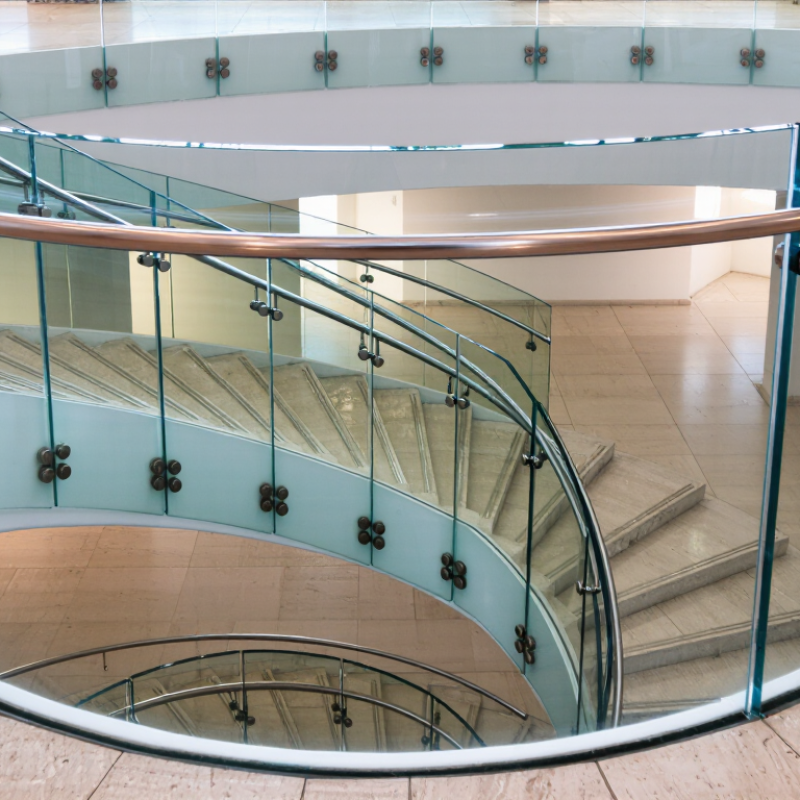
A curved glass guard is a protective railing made with shaped glass panels. It is used along staircases, balconies, terraces, ramps, and viewing platforms. Unlike a flat guard, its glass follows a continuous arc, creating a smoother visual line. The system usually combines tempered or heat-strengthened glass with laminated safety layers, stainless-steel fittings, or concealed channels.
According to Grand View Research, the global architectural glass market was valued at approximately USD 78 billion in 2023. This growth reflects stronger demand for transparent building systems. A curved glass guard supports that trend, but appearance should not control the design. Engineers must check panel thickness, radius, edge treatment, support spacing, wind pressure, and impact resistance. A small gap matters. Poor measurements can create stress at the glass edge.
The National Glass Association recommends considering laminated safety glass where post-breakage retention is important. In practice, installers should verify the opening size twice before fabrication. Site conditions are rarely perfect. Even a slight slab deviation can affect the curve and fitting alignment. The 2024 construction glass market analysis by Fortune Business Insights also identified safety performance and architectural flexibility as major growth factors. Curved glass looks light, yet the guard needs a rigid support path and carefully tested connections. One weakness remains: complex curves usually require higher fabrication skill and longer replacement times.
How Curved Glass Guards Are Designed and Manufactured in China
China Top Curved Glass Guard Manufacturer?
How Curved Glass Guards Are Designed and Manufactured in China
A dependable curved glass guard begins with site measurements, not a copied drawing. Engineers check floor levels, opening dimensions, fixing points, and the required viewing curve. Small errors matter. The design team then creates detailed CAD drawings with radius, thickness, edge treatment, and hardware positions. A physical template or small mock-up can reveal problems before production.
Manufacturing usually starts with carefully selected flat glass. CNC cutting shapes each panel, while edge polishing removes sharp imperfections. The glass is then heated and curved through controlled molds. Tempering improves strength, while laminated construction helps hold fragments together after breakage. Curved panels are difficult to reshape. The furnace temperature and cooling speed must remain consistent.
Quality control should cover more than appearance. Inspectors check surface distortion, edge quality, radius accuracy, hole locations, and hardware fit. Test assembly can expose alignment issues before shipment. In practical projects, packaging is equally important; foam supports and separated crates help protect polished edges during transport. No drawing is perfect. A late dimension change can affect the mold, schedule, and cost. Reliable manufacturers record revisions, communicate limitations, and confirm uncertain details instead of making silent assumptions. That discipline makes Chinese production more predictable for architects, contractors, and property owners.
How Curved Glass Guards Are Designed and Manufactured in China
Common nominal glass thicknesses used for curved safety guard applications are shown below. Laminated constructions combine two glass plies with an interlayer; final selection depends on span, support conditions, wind load, impact requirements, and applicable building codes.
Key Materials, Safety Standards, and Quality Controls
China Top Curved Glass Guard Manufacturer?
Key Materials, Safety Standards, and Quality Controls
A dependable curved glass guard manufacturer begins with material selection, not appearance. Laminated tempered glass is commonly preferred for guard systems. It combines impact resistance with safer breakage behavior. If damaged, the interlayer can help hold fragments together. However, glass thickness must match span, load, curvature, and fixing design.
Stainless steel and aluminum components need careful inspection. Check alloy grades, surface treatment, weld quality, and edge finishing. Sharp edges are unacceptable. Safety performance also depends on verified calculations and testing. A professional supplier should discuss applicable building codes, wind loads, human impact requirements, and local approval procedures. Standards differ between regions, so copied certificates may not prove suitability. That point is often missed.
Quality control should follow the glass from cutting to delivery. Inspect dimensions, curvature, holes, surface defects, and optical distortion. Record heat-treatment results and interlayer batch information. Trial assembly can reveal alignment problems before installation. It is not perfect, though. Small production variations may still appear, especially with complex curves. Transparent communication matters more than confident promises.
Tips: Ask for sample panels, test records, inspection photos, and packing details. Confirm tolerances in writing. Examine the glass under angled light. Request a replacement plan for damaged parts. A factory visit can also reveal cleanliness, storage methods, and process discipline. Good documentation protects the project. Frequently.
Applications, Customization, and Procurement Considerations
China Top Curved Glass Guard Manufacturer?
Curved glass guards suit stairways, balconies, hotel lobbies, and observation platforms. Their smooth radius improves visibility and softens crowded interiors. Outdoor installations need strong resistance to wind, moisture, and temperature changes. Indoor guards still require careful edge protection. A tiny chip can become a costly installation problem.
Customization begins with the radius, height, glass thickness, and support layout. Common specifications include tempered laminated glass, polished edges, drilled holes, and stainless-steel fittings. Accurate drawings should show tolerances, fixing points, and the finished curve. Digital models help, but physical samples reveal distortions more honestly. This step is often skipped. It should not be.
Procurement teams should request test reports, material traceability, inspection records, and packing photographs. Confirm whether the quoted price includes molds, edge work, hardware, and export packaging. Ask about replacement procedures for damaged panels. A low quotation may hide weak crating or unclear tolerances. Factory audits should check measuring tools, glass handling, and storage conditions. Delivery time also depends on mold preparation and approval cycles. Before production, approve a sample panel and compare its radius, color, surface quality, and hole positions against the drawings.