Sourcing a reliable Mirror Wall manufacturer in China requires more than comparing catalog prices. Wholesale buyers must examine glass quality, backing materials, frame construction, packaging, and production consistency. A polished surface can look impressive online. It may still show distortion under showroom lighting.
This guide introduces practical ways to evaluate China’s leading Mirror Wall manufacturers. It focuses on factory experience, customization ability, inspection procedures, and export support. Buyers can compare bevelled edges, safety films, LED options, mounting systems, and available dimensions. Product samples often reveal details that photographs hide. Samples reveal flaws.
Experienced manufacturers should explain their glass thickness, silvering process, protective layers, and tolerance standards. They should also provide clear drawings, test records, packing photos, and realistic production schedules. Reliable communication matters when projects involve hotels, retail stores, salons, or residential developments. Small specification changes can affect installation time and total cost.
Quality is not always linked to the lowest quotation. A cheaper Mirror Wall may use weaker backing or insufficient corner protection. Damage during transit can erase the original savings. Buyers should request pre-shipment inspections and confirm responsibility for replacements. Details matter.
No supplier is perfect, and even established factories can miss a finish requirement. Careful buyers should document approvals and review samples before mass production. This article offers a balanced starting point for wholesale sourcing. It highlights strengths, possible limitations, and questions worth asking before signing an order. Reliable decisions come from evidence, not attractive promises.
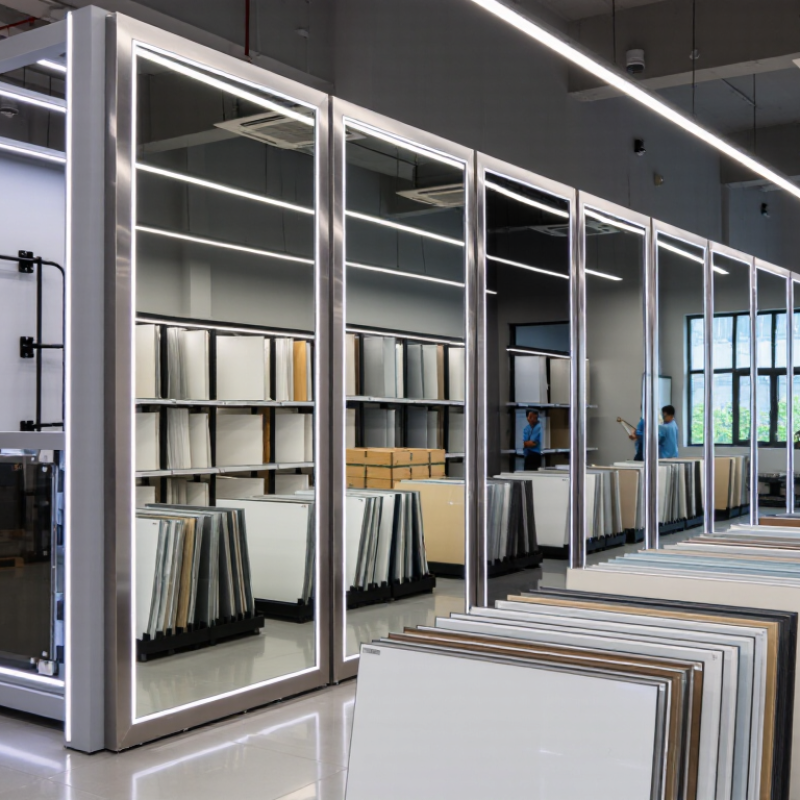
For wholesale buyers, mirror wall selection starts with the room’s risk profile, not the lowest quotation. Grand View Research’s 2024 flat glass analysis forecasts roughly 6% annual growth through 2030, reflecting wider architectural demand. That growth also raises quality-control pressure. Tempered mirror uses heat treatment to improve impact resistance and break into smaller fragments. It suits gyms, hospitality corridors, retail interiors, and other busy areas. However, edge damage can weaken a tempered panel before installation. Ask suppliers for thickness, heat-soak details, flatness, and inspection records.
Laminated mirror bonds glass layers around a polymer interlayer. If cracked, fragments usually remain attached. This retention improves safety near entrances, ceilings, and public circulation routes. It can also reduce sound transmission and ultraviolet exposure, depending on the interlayer. The trade-off is weight, cost, and possible edge moisture when sealing is poor. ASTM and EN requirements differ, so specifications should name the testing standard, not merely say “safe glass.”
Acrylic mirror is lighter and easier to cut on site. Grand View Research’s acrylic sheets report projects mid-single-digit market growth through 2030. It works well for temporary displays, curved features, children’s areas, and weight-limited projects. Yet acrylic scratches more easily and may distort under heat. No universal winner exists. I have seen low-cost sheets look impressive on delivery, then reveal waviness beneath bright ceiling lights. Request protective film, reflectivity data, flatness tolerances, fire documentation, and a physical sample before volume orders.
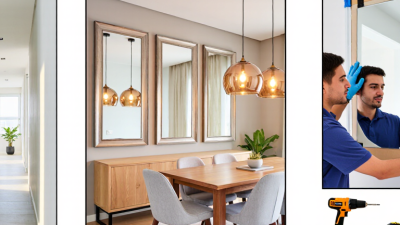
China’s mirror manufacturing industry operates at a substantial industrial scale, supported by float glass production, automated cutting lines, and mature coating facilities. Factories serve residential, hospitality, retail, and commercial projects. Many wholesale buyers can source wall mirrors in standard and custom dimensions.
Output remains strong, but volume alone does not tell the complete story. Production is influenced by construction activity, energy costs, glass prices, and seasonal orders. Some facilities use robotic polishing and edge-processing equipment, while smaller workshops still depend heavily on skilled labor.
The difference matters. Quality can vary between suppliers, even when product photos look similar.
Export value reflects both shipment quantity and product sophistication. Basic mirrors compete on price, while framed, LED, safety-backed, and oversized wall mirrors usually generate higher value per shipment. Recent market trends show growing interest in thinner profiles, safer backing materials, moisture-resistant finishes, and packaging designed for long-distance transport. Buyers should request current production data, inspection records, carton specifications, and sample approval before placing wholesale orders. Export statistics can also be difficult to compare because product categories differ across customs systems. That limitation deserves attention. A supplier’s claimed capacity may describe maximum output, not normal monthly production. Experienced buyers should examine delivery records and defect rates, not only quoted export value.
Wholesale buyers should evaluate mirror wall manufacturers through measurable production evidence, not polished catalogs. Grand View Research’s flat glass market analysis forecasts steady growth through 2030, increasing pressure on suppliers to deliver consistently. Ask for monthly output, coating-line capacity, and recent order records. A factory producing 20,000 panels monthly may still struggle with your 5,000-panel order if several projects share the same line.
MOQ affects cash flow and inventory risk. Request the MOQ for each thickness, edge finish, backing type, and custom size. One practical test is ordering samples with different dimensions. Check silver coverage, edge uniformity, backing adhesion, and image distortion under direct lighting. Lead time should include glass preparation, cutting, polishing, inspection, packing, and shipping. A quoted 25-day lead time can become 40 days when these stages are not separated. I would not trust a single promise.
Certifications require careful checking. ISO 9001 registration can support process control; the ISO Survey 2022 recorded more than 1.2 million certificates worldwide, so the logo alone proves little. Verify the certificate number, scope, issuing body, and expiry date. For mirror products, request test evidence aligned with EN 1036-1 or ASTM C1503, where applicable. Also review packaging tests, because corner damage often appears after production. The International Energy Agency reports that buildings account for about 30% of global final energy use, making durable, well-installed materials increasingly important. A manufacturer with strong capacity but weak inspection records remains a risky choice.
Wholesale buyers often specify 5–12 mm mirror glass for wall systems. Thickness alone does not prove safety. A 5 mm panel suits lighter interior applications, while 8–12 mm options offer greater stiffness for large formats. The correct choice depends on panel size, fixing points, substrate movement, and installation height. Sometimes, thicker is simply unnecessary.
EN 12150-1 defines requirements for thermally toughened soda-lime silicate safety glass, including fragmentation and mechanical performance. ANSI Z97.1 evaluates safety glazing through impact testing and classification requirements. Ask manufacturers for current test reports, batch identification, edge-finishing records, and declared thickness tolerances. Do not accept a certificate without checking its scope. The International Energy Agency’s 2023 buildings report states that buildings represent about 30% of global final energy demand, reinforcing the need for durable, properly installed materials. Market reports also show continued growth in architectural glass demand, but their forecasts vary widely. Treat projections carefully. A practical inspection should include a flat sample, reflected-image check, coating uniformity, edge quality, and packaging details. Small distortions become obvious under ceiling lights. That detail is often missed.
Wholesale buyers should begin with a precise quotation request. Include mirror dimensions, thickness, edgework, backing, wall hardware, and monthly volume. A useful quotation separates glass, processing, packaging, inland delivery, and ocean freight. It should also state the currency, production lead time, validity period, and Incoterm. The 2024 UN Comtrade database shows that glass and mirror products move through highly competitive international trade channels, so small specification differences can alter landed cost substantially. Cheap quotes are not always economical.
Request a pre-production sample and a written inspection plan. Check size tolerance, reflection clarity, edge polishing, coating uniformity, surface scratches, and hardware strength under proper lighting. ASTM quality principles support documented sampling rather than casual visual approval. Intertek’s consumer-goods inspection guidance also emphasizes measurable acceptance criteria and defect classification. Use AQL sampling when appropriate, but define critical, major, and minor defects in advance. I once saw a shipment pass a factory check yet fail after unpacking. The packaging review was too weak.
Packaging deserves equal attention. Each mirror should have protective film, corner guards, separation pads, and moisture-resistant inner protection. Export crates need impact resistance, internal bracing, and clear handling marks. The International Safe Transit Association reports that transport testing should reproduce shocks, vibration, and compression encountered in distribution. Ask for loading photographs and a packing list before dispatch. Confirm whether insurance, destination charges, customs clearance, and demurrage are included. Terms like FOB, CIF, and DDP are not interchangeable. Leave room for revision; real shipping conditions can expose assumptions that looked perfect on paper.