Why Choose an Arched Glass Shield for Global Sourcing?
Why Choose an Arched Glass Shield for Global Sourcing?
An Arched Glass Shield can turn a functional barrier into a clear architectural feature. Its curved profile softens hard room lines and guides light across polished surfaces. Yet appearance alone cannot prove quality. A reliable sourcing decision begins with measurable performance.
Dr. Helen Sanders, a recognized glass-performance specialist, offers a useful principle: “Glass performance depends on details that are often invisible.” That insight matters when comparing international suppliers. Ask about glass composition, thickness, heat treatment, edge polishing, curvature tolerance, and protective packaging. A precise arch should arrive without chips, distortion, or stressed edges. Small defects become obvious beside bright showroom lighting.
Experienced buyers should also request drawings, samples, test records, and inspection photographs. Confirm whether the supplier controls fabrication internally. Clarify replacement procedures before production begins. Shipping conditions deserve attention too. Wooden crates, corner protection, moisture barriers, and clear labeling reduce avoidable damage.
The shape is not magic. A beautiful arch may still fit poorly or perform inconsistently. I would examine the mounting system, gasket contact, drainage path, and cleaning access before approving a bulk order. This step is easy to skip. It should not be.
Global sourcing can reduce cost and expand design options. However, the lowest quotation may hide weaker inspection or unsuitable packing. A dependable partner explains limitations openly and supports them with evidence. That balance—visual elegance, technical control, and honest communication—makes an Arched Glass Shield a more confident long-term choice.
What Is an Arched Glass Shield?
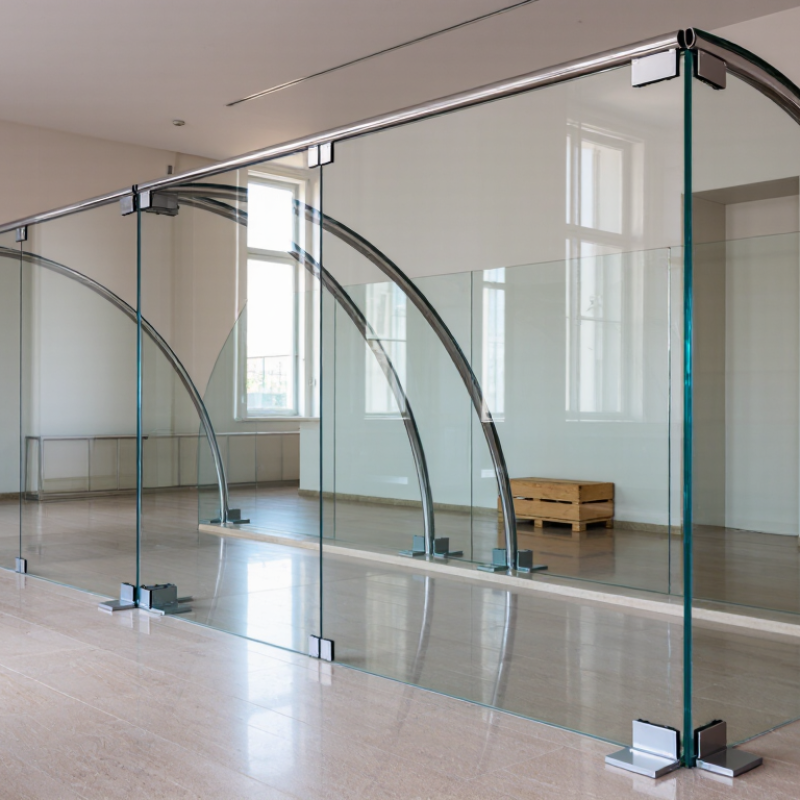
An arched glass shield is a transparent protective panel with a rounded or curved upper edge. It may use tempered glass, laminated glass, or both. Its structure depends on the intended environment and safety requirements.
The curved top softens a counter, partition, display, or equipment enclosure. It also changes how the panel handles stress. In practical sourcing, buyers should check glass thickness, arch radius, edge polishing, mounting holes, and support spacing.
Not merely decorative. The shape must fit the frame precisely.
I have seen small drawing errors create visible gaps during installation. A few millimeters can affect alignment, cleaning, and stability. The shield should also resist expected impacts, temperature changes, and daily handling. Local testing requirements still matter, even when the product crosses borders.
For global purchasing, request technical drawings, material certificates, inspection photos, and a physical sample when possible. A sample reveals edge quality better than a digital image. It can expose slight waviness, uneven polishing, or an incorrect curve. These details may seem minor. They are not. Curved glass can be more difficult to replace, so packaging and transport protection deserve equal attention. The design is attractive, but its limitations should remain visible during evaluation.
How Arched Glass Shields Provide Protection and Visibility
An arched glass shield can protect people and equipment without creating a closed-off appearance. Its curved profile softens sharp visual lines around counters, machinery, and service areas. Clear glass allows customers and workers to see faces, labels, and hand movements. That visibility supports smoother communication and safer daily operation.
Clear sightlines matter.
Protection depends on the glass specification, not the arch alone. Laminated glass can hold fragments together after breakage, while tempered glass offers improved resistance to thermal stress and impact. The correct choice depends on size, mounting method, exposure, and local performance requirements.
A sourcing review should check thickness, edge finishing, optical distortion, and the quality of drilled holes. Small flaws can become expensive during installation.
Suppliers should provide accurate drawings, material details, inspection records, and suitable protective packaging. The arch must arrive with its shape intact. Crates need internal support, moisture control, and clear handling marks.
A practical inspection can compare the delivered radius with the approved drawing and check reflections under direct light. Curved glass is not automatically better. Poor measurements or excessive glare can reduce its value.
That lesson is easy to miss when appearance leads the discussion. Reliable sourcing balances protection, visibility, installation tolerance, and repeatable quality across different production batches.
Which Materials and Designs Support Global Sourcing?
An arched glass shield needs materials that travel well and perform consistently.
Tempered glass offers strength and cleaner breakage behavior. Laminated glass adds a protective interlayer that helps hold fragments together. For bright interiors, low-iron glass can provide a clearer appearance. However, it usually costs more and may require tighter quality control.
The frame also affects global sourcing.
Stainless steel resists moisture during storage and shipment. Powder-coated aluminum reduces weight and supports many color options. Neutral finishes are easier to match across different markets.
Clear silicone or tested mechanical gaskets can improve sealing around curved edges. Material compatibility matters. A sealant that performs well in one climate may age differently elsewhere.
Design choices should support repeatable production.
Modular arches, shared mounting points, and adjustable brackets simplify regional installation. Digital drawings should specify glass thickness, radius tolerance, edge treatment, and load expectations.
Packaging needs equal attention. Foam corners, moisture barriers, and rigid crates can reduce damage during long transit. A beautiful prototype can still fail if its crate is too large or difficult to handle. That lesson is easy to overlook.
Sample inspection, batch records, and independent testing help buyers compare suppliers with greater confidence. No design fits every project perfectly, so reviewing local conditions before ordering remains essential.
Why Arched Glass Shields Suit International Procurement Needs
Arched glass shields suit international procurement because their specifications can be measured, repeated, and audited across suppliers. Procurement teams should define the radius, rise, spring line, thickness, edge finish, and fixing points before requesting quotations. Tempered or laminated glass may be appropriate, depending on impact exposure and installation conditions. Test evidence should match applicable regional standards, not just a supplier’s product description. Small details matter. A 3-millimeter mismatch can affect the frame, seals, and final alignment.
Shipping also shapes the decision. UNCTAD reports that more than 80% of global merchandise trade by volume moves by sea. Arched panels therefore need rigid crates, corner protection, moisture control, and clear lifting marks. Their curved geometry can reduce stacking efficiency, so buyers should compare cubic volume, not only unit price. The World Bank’s 2023 Logistics Performance Index highlights customs, infrastructure, and shipment reliability as major supply-chain factors. These checks help international buyers plan realistic delivery windows.
Energy performance adds another procurement consideration. The International Energy Agency states that buildings consume about 30% of global final energy and create roughly 26% of energy-related emissions. A well-specified glass shield can support daylight access and durable interior protection, although it cannot solve building efficiency alone. UNEP’s 2023 Global Status Report also links buildings and construction to 37% of global energy-related emissions. That figure deserves attention, but curved glass is not automatically sustainable. Material weight, transport distance, replacement risk, and end-of-life handling still need review.
Why Choose an Arched Glass Shield for Global Sourcing?
Glass mass is a practical procurement factor because it affects packaging, handling, freight planning, and installation requirements. The values below are calculated from a nominal glass density of 2,500 kg/m³ using the formula: thickness × density. Curved or arched geometry may require additional packaging and protective materials.
Data basis: approximate glass mass per square metre before frames, fittings, coatings, packaging, or hardware. Values are calculated for 6 mm, 8 mm, 10 mm, and 12 mm glass thickness.