Why Choose Bent Glass for Your Project?
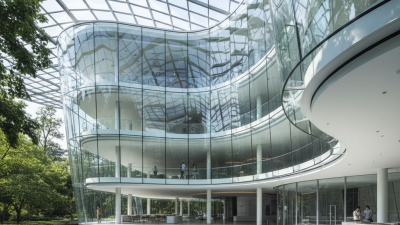
Bent Glass can turn a flat façade into a soft arc, a curved skylight, or a transparent canopy. The visual effect is immediate. The technical questions are less visible. Can the selected glass meet the project’s safety, thermal, optical, and structural requirements? Those answers depend on the glass makeup, radius, fabrication process, framing, and installation details.
The U.S. Department of Energy reports that windows account for about 25%–30% of residential heating and cooling energy use. That figure concerns windows broadly, not Bent Glass specifically, but it shows why glazing choices deserve careful review. Grand View Research valued the global architectural glass market at approximately $57.5 billion in 2023; that figure also covers far more than curved products. Building-envelope specialist Dr. Helen Sanders offers a useful perspective: “Judge the entire glazing assembly, not the curve alone.” This is a paraphrase, not a verbatim quotation. A project team should review mock-ups, optical distortion, coatings, edge quality, and connection details with qualified fabricators and engineers. A beautiful curve can still disappoint. Even a small reflection or visual ripple may matter at eye level. Bent Glass is not automatically the best option, either; cost, lead time, and replacement complexity can weigh against it. The practical choice begins with the design intent, then tests whether performance and fabrication can support it.
What Bent Glass Is and How It Is Made
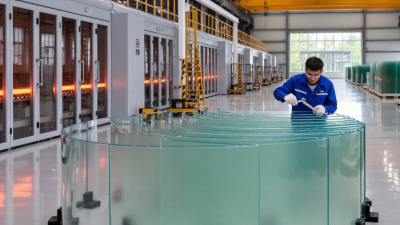
Bent glass begins as a flat sheet heated until it softens and becomes flexible. It is shaped over or against a curved mold, then cooled under controlled conditions. The finished panel can follow a radius, arch, or compound curve. Its exact form depends on the mold and project design. Some options, such as coatings or laminates, may affect the fabrication sequence.
During production, temperature and cooling rates matter. Too much heat can distort the surface; uneven cooling may create stress. Depending on the design, the glass may be annealed, heat-strengthened, or tempered. These treatments are not interchangeable, so confirm the required safety performance with a qualified glass fabricator. A drawing can look precise, yet the actual opening may vary slightly. That detail is easy to overlook.
Tips: Share accurate dimensions, drawings, and the intended use before fabrication. Ask about minimum bend radius, edge finish, and available glass treatments. Check samples in the project’s lighting, too; reflections can make a curve look different than expected.
Key Properties of Bent Glass
Key Properties of Bent Glass
Bent glass begins as a flat sheet, heated until it softens and follows a shaped mold. The finished curve changes how light travels across a surface, but it does not automatically make the glass stronger. Performance depends on the glass type, thickness, curve radius, edge finish, and production process. Small details matter. A tight radius may require different design choices from a broad, gentle curve.
Clarity is a visible property, yet curved glass can reflect straight lines unevenly. For example, ceiling lights may appear slightly wavy when viewed at an angle. Some distortion may be acceptable in decorative applications, but it can matter near displays or sightlines. Tempered bent glass can offer increased impact resistance, while laminated construction helps keep broken pieces attached to an interlayer. These options are not interchangeable, so confirm the required performance with a qualified fabricator.
Curved panels also need suitable support and accurate installation. A small mismatch between the glass and its frame can create pressure at an edge, where damage may begin. Unlike flat panes, bent units can be harder to replace, especially when the curve is custom. Requesting samples or reviewing a full-size mock-up can reveal optical effects early. Honestly, that step can feel slow, but discovering a problem after installation is worse.
Common Applications Across Different Industries
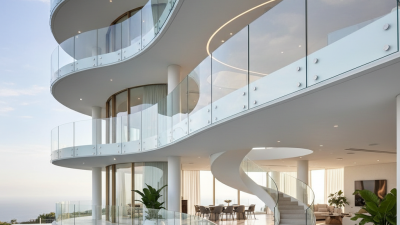
Bent glass is used in buildings where a flat pane would break the intended line of a façade, atrium, or interior partition. In offices and public spaces, curved panels can wrap around entrances, counters, and elevator enclosures. The result can feel open, though tight curves may complicate cleaning and replacement. Small details matter.
The 2024 Global Status Report for Buildings and Construction from UNEP and the Global Alliance for Buildings and Construction estimates that buildings account for 32% of global energy use and 34% of energy- and process-related carbon dioxide emissions. That context makes glass specification important, but curved glass alone does not improve energy performance. Coatings, frame design, orientation, and airtight installation all matter. In transport, curved windshields and windows follow vehicle body contours while supporting visibility. The International Organization of Motor Vehicle Manufacturers reported approximately 93.5 million vehicles produced worldwide in 2023, illustrating the scale of this application. Retail displays, furniture, and lighting use bent glass for rounded cases, tabletops, and shades. It can create a clean silhouette. Yet unusual shapes may mean longer lead times and fewer replacement options, a practical drawback worth considering early.
Benefits of Bent Glass for Project Design
Bent glass brings a softer, more continuous shape to a project. A curved window can open a room toward a garden, while a rounded partition can guide movement without creating a hard visual stop. It also catches daylight at changing angles, adding subtle shifts in reflection as people move through the space. The effect is elegant, but it depends on the design.
For project design, curved panels can reduce the number of visible corners and help connect separate architectural elements. They may also suit compact spaces where a sweeping edge feels less abrupt. Glass can be specified with different tints, finishes, and safety constructions, though each choice affects appearance and performance. Tight curves, unusual dimensions, and frame details can increase fabrication complexity. A drawing may look simple; the physical sample sometimes tells another story. Coordinate the radius, glass thickness, support system, and installation access early. A small mismatch can become obvious along a long curved edge.
Tips: Request a full-scale or representative sample when the curve is visually prominent. Check reflections from both inside and outside, and confirm how the panel will be transported and installed. Leave room for adjustment. Curved glass rewards careful planning.
Why Choose Bent Glass for Your Project? - Benefits of Bent Glass for Project Design
| Design factor |
Benefit of bent glass |
Project applications |
Planning considerations |
| Form and visual flow |
Curved panels can create continuous forms that are difficult to achieve with flat glass alone. |
Curved façades, feature walls, partitions, display cases, and interior screens. |
Confirm the required curve, panel dimensions, and edge details with the fabricator before finalizing the design. |
| Light and sightlines |
A curved surface can guide views around corners and add visual depth while retaining the light-transmitting qualities of glass. |
Atriums, reception areas, rounded storefronts, and open-plan interiors. |
Curvature may affect reflections and perceived image straightness; review samples or a full-size mock-up where appearance is critical. |
| Design flexibility |
Glass can be formed to project-specific curved profiles, allowing designers to coordinate glazing with a building’s geometry. |
Custom entrances, curved balustrades, canopies, and architectural feature elements. |
Achievable shapes and minimum bend radii depend on glass type, thickness, dimensions, and manufacturing capability. |
| Safety specification |
Bent glass can be specified in safety-glazing configurations where suitable products and processing are available. |
Glazing locations where the applicable building code requires safety glass. |
Confirm the required safety classification, heat treatment, lamination, and code compliance for the project location. |
| Material coordination |
Curved glazing can be coordinated with metal framing and other façade or interior materials to support a unified design. |
Curtain walls, entrance systems, furniture, and custom interior fittings. |
Allow for fabrication tolerances, suitable setting blocks, compatible seals, drainage, and installation access. |
| Production and cost |
A project-specific curve can deliver a distinctive result without relying on multiple flat panels to approximate the same form. |
Projects where curved geometry is an important architectural feature. |
Custom tooling, longer lead times, limited replacement options, and higher costs than standard flat glazing may apply. |
Factors to Consider When Specifying Bent Glass
Bent glass specifications should begin with geometry, not appearance alone. Define the radius, arc length, chord, glass thickness, and finished dimensions; even a small radius change can affect fit and visual continuity. The U.S. Department of Energy estimates that heat gain and loss through windows account for 25%–30% of residential heating and cooling energy use. That figure is not a performance guarantee for a bent unit, but it makes thermal targets worth setting early.
Choose the glass build-up to suit the exposure and safety requirements. Clarify whether the panel needs heat treatment, lamination, low-emissivity coating, or a combination, and confirm that the chosen process works with the curve. The National Fenestration Rating Council uses U-factor and solar heat gain coefficient to describe window performance. Ask suppliers how those ratings apply to the complete bent assembly; a glass-only value may not represent the installed system. Details matter.
Plan for optical distortion, edge quality, supports, and installation tolerances. Reflections across a curved surface can reveal waviness that is barely visible in a flat sample. Paper drawings rarely catch everything. A full-size template or mock-up can expose clashes with framing before fabrication, though it adds time and cost. Record acceptable tolerances, handling limits, and replacement expectations in the specification, rather than leaving them to interpretation.