
Can Laminated Glass Meet the Surge in Global Blast-Resistant Construction?
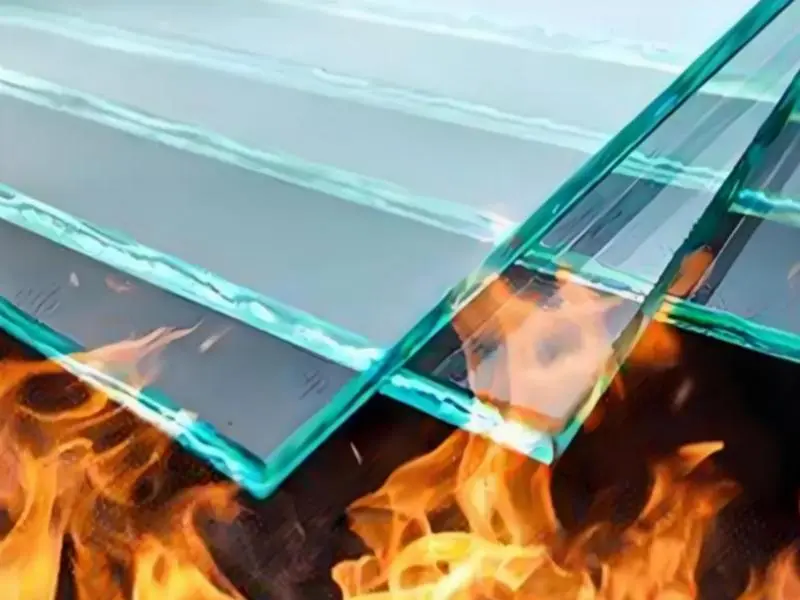
As security threats change and cities get more crowded, the construction industry is facing a big question: can traditional windows really hold up against modern explosions? The answer is laminated glass—something that’s quietly gone from being a basic safety feature to a key part of stronger, more resilient buildings. With the global impact-resistant glass market expected to jump from $32.9 billion in 2024 to $69.8 billion by 2034, all eyes are on laminated glass and its growing role in blast-resistant construction.
The New Reality of Blast-Resistant Design
The landscape of architectural security has shifted dramatically over the past decade. No longer confined to military installations and government buildings, blast-resistant glazing is now a standard specification for airports, financial centers, critical infrastructure, and even commercial high-rises. This shift is driven by a sobering reality: terrorist attacks, industrial accidents, and the increasing frequency of cascading physical impacts demand that building envelopes perform under extreme duress.
Recent updates to regulatory frameworks have codified this imperative. ASTM F2912-25, the latest standard specification for glazing systems subject to airblast loadings, now explicitly addresses laminated glass as a primary solution for both new installations and retrofit applications . The standard recognizes that laminated glass—with its interlayer-bonded construction—behaves fundamentally differently under blast loads than monolithic glass, maintaining structural integrity and containing hazardous fragments even when the outer plies fracture.
The market response has been swift. Security glazing that combines ballistic, blast, and forced-entry resistance now represents a significant growth segment, with the bulletproof security glass market alone reaching $8.5 billion in 2025 and projected to hit $29.1 billion by 2035 . Within this segment, laminated glass architectures dominate, valued for their superior energy absorption and post-impact performance.
How Laminated Glass Achieves Blast Resistance
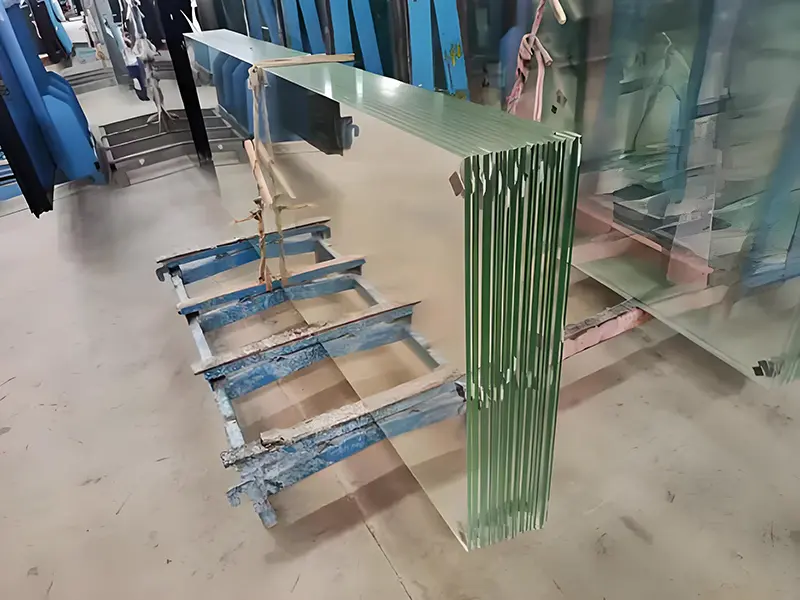
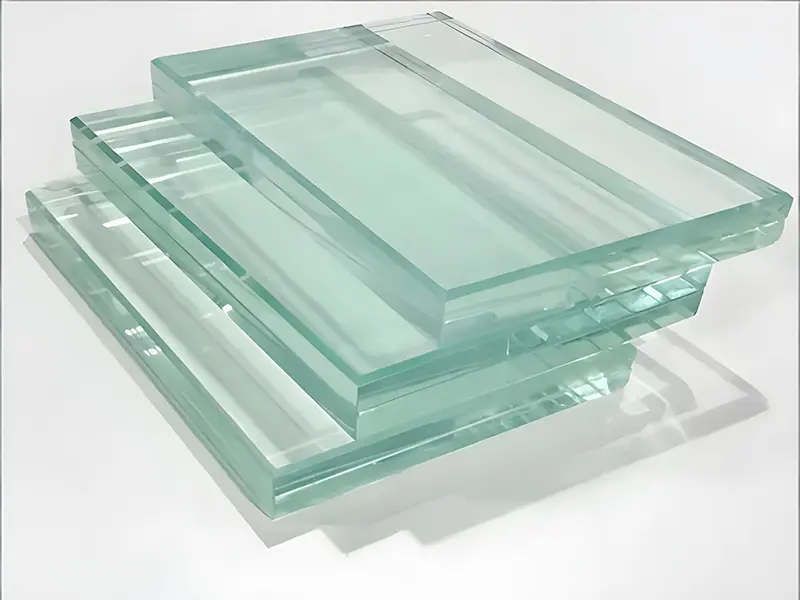
Understanding why laminated glass has become the material of choice for blast-resistant applications requires examining its fundamental construction. Unlike monolithic glass or even tempered glass, which shatters into small pieces upon impact, laminated glass consists of two or more glass plies bonded together by a polymer interlayer—typically polyvinyl butyral (PVB), ionoplast polymers like SentryGlas, or ethylene vinyl acetate (EVA) .
When a blast wave strikes a laminated glass assembly, the glass plies may crack, but the interlayer remains intact, absorbing kinetic energy and preventing the formation of hazardous flying debris. This post-crack membrane behavior is the key differentiator. The interlayer acts as a structural membrane that continues to resist the pressure load even after the glass has fractured, buying precious seconds for occupants to evacuate and preventing the catastrophic failure of the building envelope.
Recent innovations in interlayer chemistry have dramatically enhanced this capability. Advanced ionoplast interlayers offer up to five times the tear resistance of conventional PVB, enabling thinner laminated glass constructions that maintain optical clarity while delivering higher protection levels . This weight reduction is critical for both new construction—where dead load impacts structural design—and retrofit projects, where existing frames may not support heavy security glazing assemblies.
Integrating Low-E Glass Without Compromising Protection
One of the most significant challenges facing architects and specifiers has been the apparent trade-off between security and energy performance. Traditional blast-resistant laminated glass assemblies, with their multiple thick plies, were often associated with poor thermal insulation and reduced solar control. The solution lies in the strategic integration of Low E glass within the laminated stack.
Low E glass—short for low emissivity—carries a microscopically thin metallic coating that reflects thermal radiation while allowing visible light to pass through . When incorporated into a laminated glass unit designed for blast resistance, Low E glass can be positioned with the coating facing the interlayer or the insulating cavity, depending on the desired thermal performance.
Market offerings now include laminated glass products that combine reflective aesthetics with superior solar control. Products such as T-Sunlux demonstrate how laminated glass can achieve low solar heat gain coefficients (SHGC) and reduced U-values while maintaining the structural integrity required for blast-resistant applications . When Low E glass is laminated with the coating protected against the PVB interlayer, the resulting assembly delivers both energy efficiency and blast protection without compromising either function.
For projects requiring maximum thermal performance, laminated glass can be combined with Low E glass in insulating glass units (IGUs). In this configuration, the blast-resistant laminated glass serves as the inboard lite, while an outboard Low E glass lite provides thermal control. The entire assembly benefits from the inert gas fill between panes, creating a building envelope that is simultaneously secure, energy-efficient, and comfortable for occupants.
Decorative Glass and Mirror Glass in Security Applications
The perception that security glazing must be utilitarian and visually obtrusive has been thoroughly disproven by contemporary laminated glass technologies. Decorative glass and mirror glass can now be integrated into blast-resistant laminated glass assemblies without compromising safety performance.
Decorative glass applications within laminated security assemblies include sandblasted patterns, etched designs, and interlayer-embedded decorative films. Because the decorative treatment can be applied to the interior surface of one glass ply before lamination, the aesthetics are permanently protected from abrasion and environmental degradation while the laminated glass structure maintains its blast resistance .
Mirror glass presents an interesting case study in the convergence of aesthetics and security. Traditional mirrored glass is produced by applying a metallic coating to one surface of a float glass sheet, then covering it with a protective sealant . For blast-resistant applications, manufacturers have developed laminated glass solutions where the mirror coating is applied to the interior surface of the glass and then laminated with an additional ply, protecting the coating while adding structural redundancy.
One-way mirror glass—highly reflective on one side and transparent on the other—has found applications in security screening areas, interrogation rooms, and critical infrastructure facilities where observation must be both discreet and protected. Products with high reflectivity approaching mirror-like appearance are now available in laminated glass configurations, meeting both aesthetic specifications and blast-resistance requirements .
The Role of Testing and Certification
The surge in demand for blast-resistant laminated glass has been accompanied by increasingly sophisticated testing protocols. ASTM standards now provide comprehensive frameworks for evaluating laminated glass performance under airblast loadings .
Testing typically involves subjecting full-size laminated glass assemblies to simulated blast pressures using shock tubes or actual explosive charges. Performance is evaluated based on the hazard rating—from minimal hazard (glass cracks but remains in frame) to high hazard (glass fragments penetrate the test chamber). The inclusion of glass slivers in hazard assessment has raised the bar for laminated glass manufacturers, requiring interlayers that not only hold large fragments but also prevent the formation of fine, hazardous particles .
For specifiers, understanding these testing protocols is essential. ASTM F2912 requires that threat and risk assessment be performed prior to glazing selection, with hazard ratings selected based on the installed position of the laminated glass . Glazing at higher elevations relative to the floor may require more stringent hazard considerations, recognizing that falling fragments from upper floors pose risks to both occupants below and emergency responders.
Market Outlook and Innovation Trajectory
The trajectory for blast-resistant laminated glass points toward continued growth and innovation. Market analysts project the impact-resistant glass sector to reach $67.8 billion by 2032, with laminated glass maintaining its leadership position . Several factors are driving this expansion:
First, the commercialization of transparent ceramics and ALON (aluminum oxynitride) armor is beginning to influence the laminated glass market. While these materials currently serve high-end military and aerospace applications, scaled production is expected to bring weight reductions of up to 50 percent compared to traditional glass-polymer laminates . For building applications, this could enable blast-resistant glazing that is dramatically lighter and thinner than current solutions.
Second, the integration of functional layers into laminated glass is creating “smart” security glazing. Embedded conductive meshes can provide electromagnetic shielding for data centers and secure facilities, while switchable transparency technologies allow blast-resistant laminated glass to transition from transparent to opaque during security incidents .
Third, sustainability considerations are reshaping production processes and material selection. Manufacturers are developing laminated glass solutions with improved recyclability and reduced embodied carbon, responding to green building requirements that now intersect with security specifications .
Conclusion
The question posed in the title—can laminated glass meet the surge in global blast-resistant construction—finds its answer in the material’s performance, versatility, and trajectory of innovation. Laminated glass has proven itself not merely capable of withstanding blast loads but capable of doing so while incorporating Low E glass for energy efficiency, decorative glass for architectural expression, and mirror glass for specialized security applications.
As cities grow denser and threat environments more complex, the building envelope must serve multiple functions simultaneously: protection, energy performance, aesthetics, and occupant well-being. Laminated glass, with its unique combination of structural redundancy, design flexibility, and compatibility with advanced coatings and interlayers, stands ready to meet these demands.
The market’s growth projections reflect this confidence. From $32.9 billion today to nearly $70 billion within a decade, the impact-resistant glass market—led by laminated glass—represents one of the construction industry’s most dynamic and essential sectors . For architects, engineers, developers, and security professionals, the message is clear: laminated glass is not merely meeting the surge in blast-resistant construction; it is enabling a new paradigm of resilient, secure, and beautiful buildings for an uncertain world.