
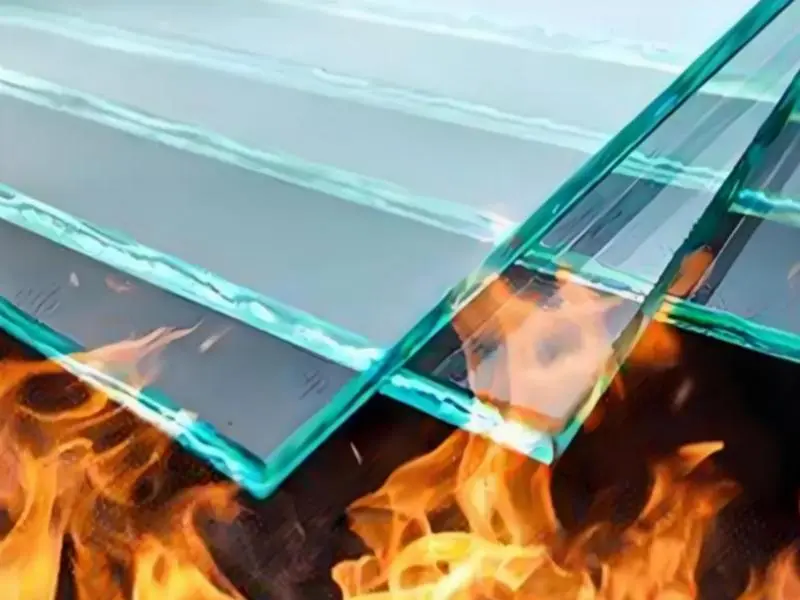
Beyond Clear: What New Aesthetics Does Fireproof Glass Offer?
For decades, when people mentioned "fireproof glass" (a more precise term would be "fire-resistant glass"), the first thing that sprang to mind was those thick, wire-reinforced panels, mostly seen in industrial stairwells and service corridors. Its main job was simple: to stop fire and smoke from spreading. Looks were hardly a consideration; they were often overlooked for the sake of safety.
But now, a big change is happening. Thanks to technological progress, the old divide between safety and design is being broken down. Fire-safe glass is now becoming a refined, stylish, and essential part of modern buildings. This change isn't just about keeping the glass clear—it's about opening up a whole new way of building where openness, light, and the smooth flow of space are all kept intact, without ever putting safety at risk.
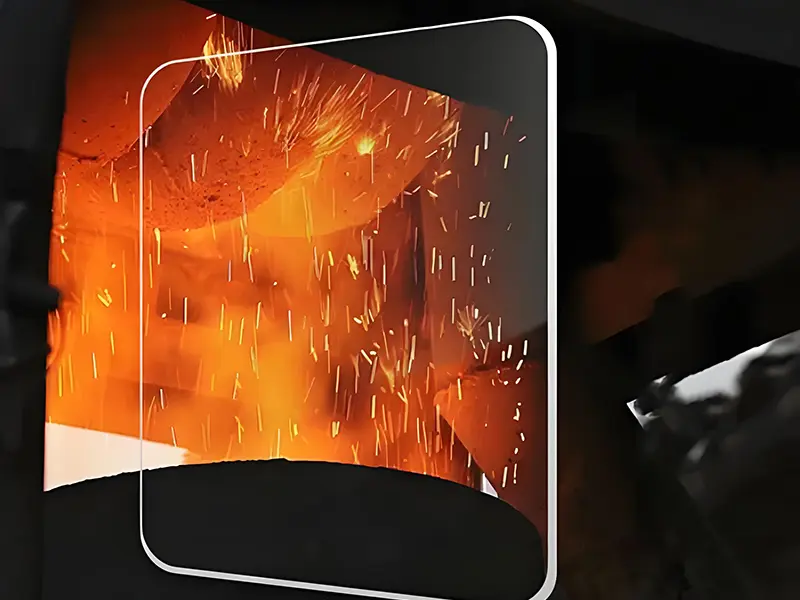
The Evolution from Opaque Barrier to Design Element
The journey begins with understanding the material's progression. Early fireproof glass was often a modified form of wired glass, providing a basic barrier but offering poor clarity and limited impact resistance. The development of ceramic glass and multi-layered intumescent interlayer systems marked a turning point. These technologies could achieve fire ratings from 20 minutes to over 3 hours (EI/EW classifications) while maintaining optical clarity rivaling standard glass.
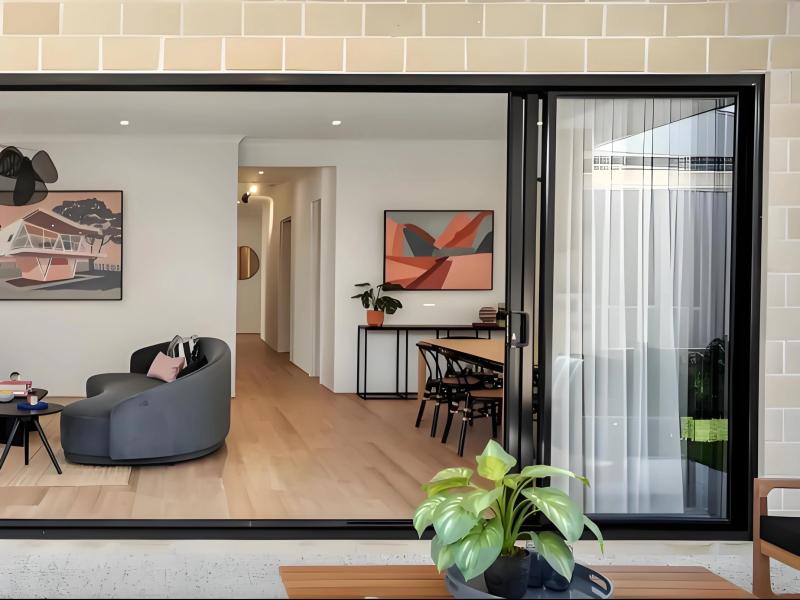
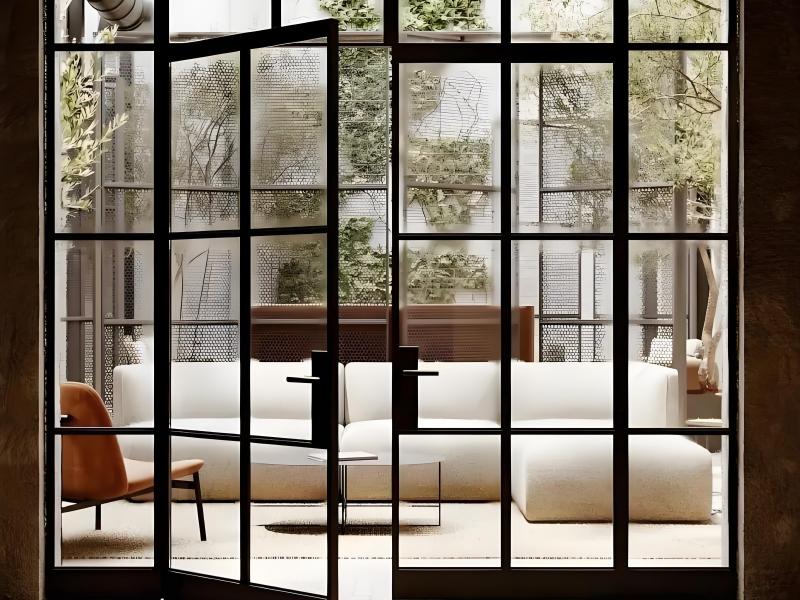
This technological leap was the catalyst for aesthetic liberation. Architects were no longer forced to hide fire-rated elements. Instead, they could integrate them visibly into the design narrative. The fire door, once a heavy, solid metallic obstruction, could now be a seamless, full-glass pivot door, indistinguishable from its non-rated counterparts until needed in an emergency. Similarly, expansive firewall glass assemblies began replacing traditional concrete or masonry partitions, creating luminous, open-plan environments in offices, hospitals, and schools that still complied with stringent compartmentalization codes.
The Expanding Palette: Transparency, Texture, and Tone
The aesthetic potential of modern fire-resistant glass extends far beyond simple transparency. Manufacturers are offering a suite of options that align with contemporary design trends:
Tints and Coatings: Soft grey, bronze, or blue tints can be integrated to control solar heat gain, reduce glare, and contribute to a building's external facade aesthetic. Low-emissivity (Low-E) coatings, crucial for energy efficiency, are now compatible with high-performance fire-rated units, allowing them to be part of sustainable, high-performance curtain wall systems.
Patterned and Textured Surfaces: For areas requiring privacy or diffusion of light, fire-safe glass is available with acid-etched, sandblasted, or ceramic-fritted patterns. These can range from subtle, uniform obscuration to bold, custom-designed graphics. This allows a firewall glass partition in a corporate lobby to feature the company's logo or an artistic motif, transforming a safety component into a branding element.
Laminated Integration: The lamination process, essential for creating the fire-resistant interlayer sandwich, opens doors to further creative possibilities. Decorative films, fabrics, or even thin natural materials can be encapsulated between glass plies, offering unique textures and visual effects. This integrates the glass into bespoke interior design schemes.
Structural Minimalism: The pursuit of the "invisible" barrier pushes aesthetics to its zenith. Developments in silicone fire-stop glazing systems and virtually hidden framing allow for the creation of stunning, monolithic firewall glass installations. The visual interruption is minimized, maximizing the feeling of openness and continuity. This application is revolutionary in spaces like museums, retail stores, and high-end residences, where design integrity is paramount.
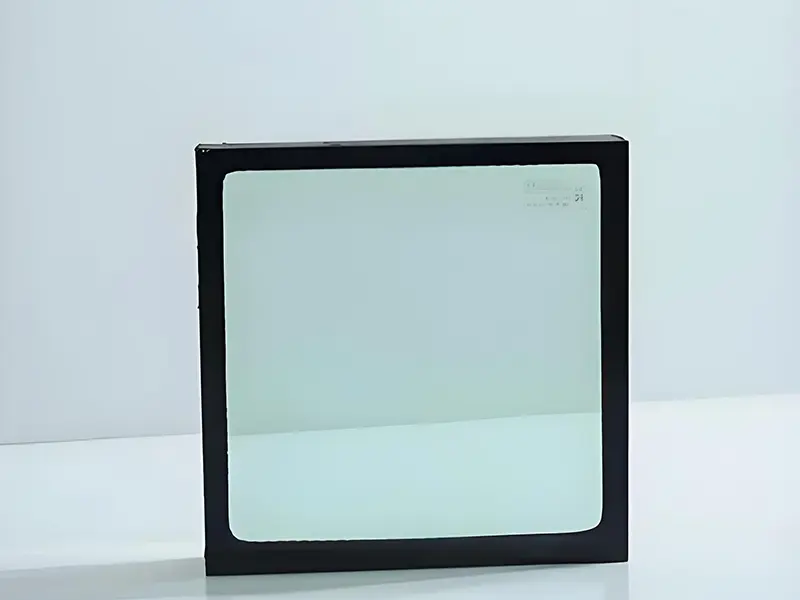
Integration and Performance: The Technical Backbone of Beauty
The aesthetic appeal is only viable because of deep technical rigor. A fire door with a full-glass panel is not merely a glass pane in a frame. It is a engineered system comprising:
Ceramic or Multi-Layer Glass: The glazing material able to withstand thermal shock and radiant heat.
Intumescent Interlayers/Seals: These expand dramatically when heated, turning opaque to form an insulating, charred barrier that blocks flames, smoke, and toxic gases. The seals around the glass perimeter are equally critical.
Rated Frame and Hardware: The entire assembly—frame, hinges, and closing mechanism—must be tested and certified as a complete unit to maintain its integrity under fire conditions.
For large-scale firewall glass, the engineering complexity increases. The framing system must accommodate thermal expansion, structural loads, and the immense pressure from the intumescent seals activating. The connection details between the glass wall, the building structure, and the floor/celling fire barriers are where true fire-stopping occurs. This hidden technical symphony is what makes the elegant, transparent aesthetic possible and reliable.
Future Horizons: Smart Glass and Adaptive Safety
The frontier of fireproof glass aesthetics is becoming interactive. The integration of fire-resistant glass with smart glass technology (PDLC or electrochromic) is on the horizon. Imagine a partition that is transparent for daily open-plan collaboration but can be switched to opaque for privacy at the flick of a switch. In a fire emergency, the system could automatically switch to a maximum transparency mode for visibility while the intumescent layers engage to provide the fire barrier. This convergence of dynamic aesthetics, user comfort, and life safety represents the next paradigm shift.
Conclusion: Redefining the Architectural Vocabulary
The question is no longer if fire-safe glass can be beautiful, but how its beauty will be employed. It has evolved from a purely utilitarian product into a versatile design medium that satisfies code, engineering, and human experience. By moving beyond clear, it allows architects and designers to craft environments that are simultaneously safe, luminous, and inspiring. The transparent fire door, the expansive firewall glass atrium, and the textured fire-rated partition are now symbols of a holistic design philosophy—one where safety is seamlessly, and beautifully, woven into the very fabric of our built environment. This is the new, indispensable aesthetic of safety.