

Could Vacuum Insulated Glass Become the Ideal Choice for Ultra-Low-Energy Buildings?
The world's drive to cut carbon emissions is putting massive pressure on the building industry. Architects, engineers, and developers are racing to design ultra-low-energy and net-zero buildings, and that’s turning the spotlight on the weakest part of the building envelope: windows. Even though modern double-glazed units are better than old single-pane windows, they often still don’t meet the really demanding thermal performance needed today.
Now, into this high-pressure scene comes vacuum insulated glass—or VIG. It used to be a niche lab technology, but it’s starting to hit the market for real. And that raises a big question: could this finally be the ideal glazing for the next wave of sustainable architecture?
The Thermal Performance Challenge in Ultra-Low-Energy Design
Ultra-low-energy buildings, including Passive House standards, demand exceptionally low U-values (the measure of heat loss) for all envelope components. Windows are particularly problematic; even advanced triple-pane insulated windows with argon gas fills and Low-E coatings struggle to achieve U-values consistently below 0.60 W/(m²K). This thermal bridge creates a significant energy penalty, often requiring downsizing of glazed areas—a compromise that conflicts with architectural desires for daylight, views, and aesthetic transparency.
The fundamental physics of conventional insulating glass reveals the limitation. Its insulating capacity relies on sealed air spaces filled with inert gas. While the gas reduces conductive and convective heat transfer, radiation and conduction across the gap persist. Widening the gap improves performance only to a point before convection currents negate the benefits. This performance ceiling is the primary barrier preventing conventional windows from matching the insulation value of a well-insulated wall.
Vacuum Insulated Glass: A Revolution in Glazing Physics
Vacuum insulated glass tackles this challenge at its root by removing the conductive medium itself. A VIG unit consists of two glass panes, separated by a microscopic array of tiny support pillars, with the internal space evacuated to a high vacuum—typically below 0.1 pascal. This near-perfect vacuum eliminates almost all gaseous conduction and convection.
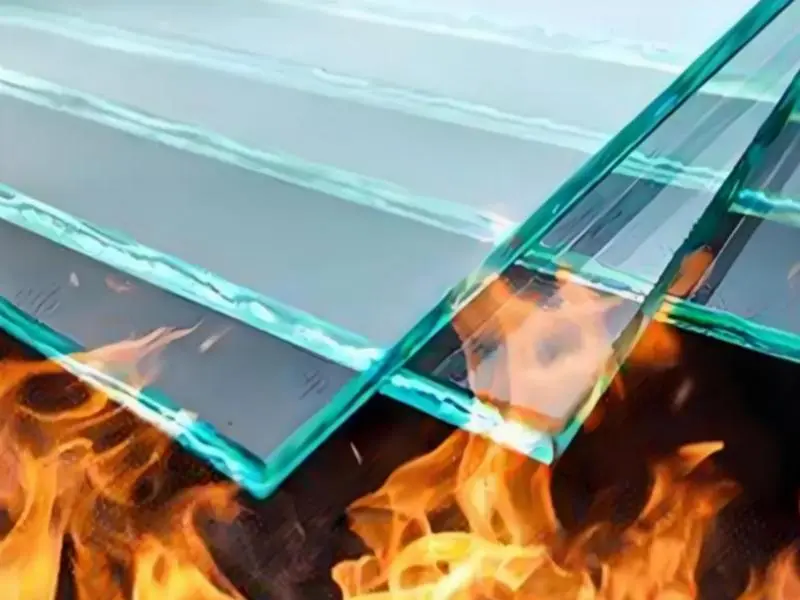
The core challenge has always been maintaining this vacuum over decades against atmospheric pressure, which exceeds 10,000 kg per square meter. Modern VIG solves this with two key innovations. First, an impermeable, laser-welded glass frit seal hermetically bonds the panes at the edge. Second, a non-evaporable getter material is sealed inside the cavity, continuously absorbing any residual gases or moisture that might permeate over time, ensuring long-term vacuum integrity. To mitigate thermal stress on this sealed unit and enhance safety, the outer panes are often made from tempered glass. The result is a remarkably slim profile unit, as thin as 6.2 mm total, achieving center-of-glass U-values as low as 0.4 W/(m²K) and whole-window U-values approaching the Passive House dream of 0.6 W/(m²K).
Head-to-Head: VIG vs. Advanced Conventional Insulating Glass
When specifying glazing for a ULEB, the choice between VIG and advanced triple-pane units is nuanced. The primary advantage of VIG is its superior thermal efficiency in a slender profile. A typical VIG unit can match or exceed the performance of a triple-pane unit that is over three times thicker and significantly heavier. This slimmness translates into substantial benefits: reduced depth required for window frames, expanded design flexibility for historic renovations where thick glazing is prohibitive, and lower structural load on building facades.
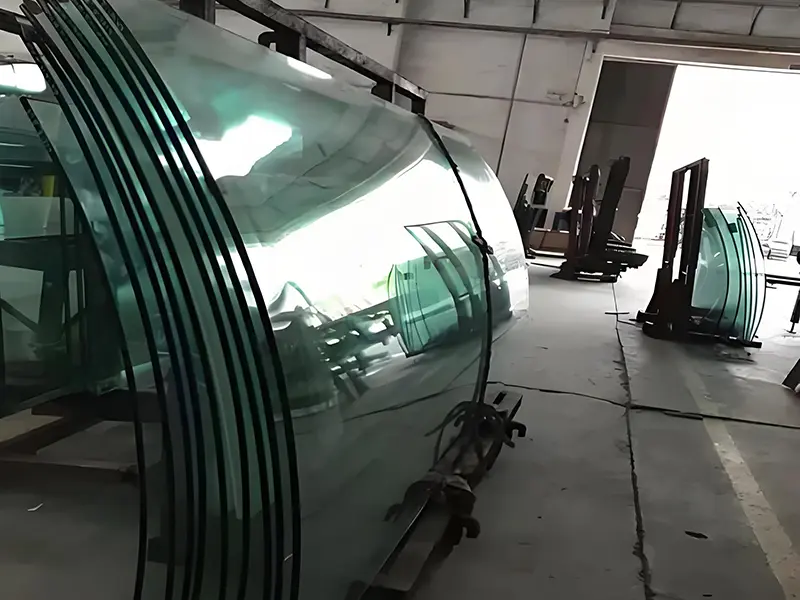
However, the current landscape is not without trade-offs. Premium triple-pane insulating glass benefits from mature, automated production lines, leading to lower current costs and widespread availability. It also integrates more easily with dynamic elements like between-pane blinds. VIG production, while scaling, remains a more specialized process. Furthermore, the necessity for an almost perfect seal makes VIG more sensitive to edge sealing and frame detailing during installation. The use of tempered glass for the panes is standard for VIG to handle pressure differentials, which can increase cost compared to annealed glass but provides inherent safety benefits.
Synergies and Integration: The System-Wide Advantage
The true potential of vacuum insulated glass is unlocked when it is considered as part of an integrated facade system. Its performance synergizes powerfully with other advanced building technologies. For instance, when combined with warm-edge spacers and thermally broken frames, the whole-window U-value can reach its optimal low. The excellent thermal performance directly reduces the size and cost of HVAC systems in ULEBs.
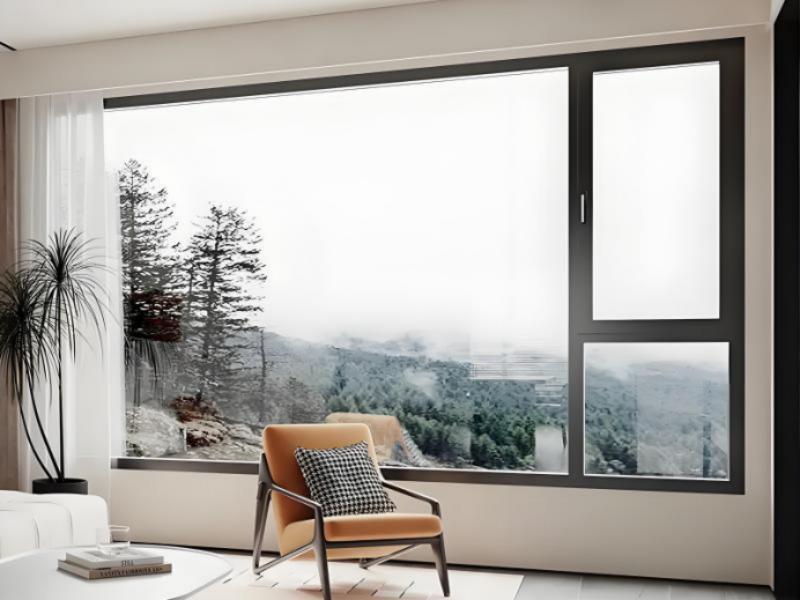
From an architectural standpoint, VIG’s slimness allows for stunning minimalist designs with exceptionally narrow sightlines, maximizing the glass-to-frame ratio and transparency. For retrofit projects—a critical frontier for global carbon reduction—the ability to install a high-performance glazing unit into existing window frames without major structural alteration is a transformative advantage over bulky triple-pane replacements.
Market Trajectory and the Path to Widespread Adoption
The trajectory for VIG is promising but hinges on overcoming key barriers. Currently, it occupies a premium niche, often specified for high-profile Passive House projects or luxury retrofits where performance and aesthetics justify cost. Major glass manufacturers in Europe and Asia are now investing heavily in scaling production capacity and automating processes, which is expected to drive costs down following a classic learning-curve model, similar to the evolution of photovoltaic panels.
The regulatory environment is a powerful accelerant. As building codes worldwide—from the EU’s Energy Performance of Buildings Directive to local net-zero mandates—ratchet up thermal requirements, conventional insulated windows will eventually hit a performance ceiling. VIG is uniquely positioned to meet these future mandates without forcing radical design compromises. Furthermore, its long service life and superior energy savings contribute positively to whole-life carbon calculations, an increasingly important metric in sustainable construction.
In conclusion, vacuum insulated glass presents a compelling and technically superior answer to the central glazing dilemma of ultra-low-energy buildings. While current cost and availability challenges prevent it from being the default choice today, its fundamental advantages in thermal performance, profile, and design integration are undeniable. As production scales, costs decline, and building codes grow stricter, VIG is poised to transition from a premium specialty product to a mainstream, and perhaps ideal, solution for creating transparent, comfortable, and truly sustainable buildings that meet the urgent demands of the climate era. The question is not if, but when, this revolutionary insulating glass technology will redefine our expectations of the modern window.