

Can Vacuum Insulated Glass Replace Double-Glazing Units?
For more than forty years now, the go-to for thermal insulation in windows and facades has been the double-glazing unit—you know, those two panes of glass with a gas-filled spacer in between. But there's a quieter, kind of under-the-radar change happening in labs and small-scale production lines: vacuum insulated glass, or VIG for short.
This stuff has thermal performance that's almost twice as good as regular double-glazing, and it's only half as thick. So, it really makes you wonder: Can this thin, edge-sealed technology actually take the place of the tried-and-true insulating glass products that architects and builders have been using since the 1980s?
The answer, like most in the building glass industry, depends on application, cost, and architectural demand. To understand the potential shift, we must examine how vacuum insulated glass performs against traditional double-glazed units across real-world metrics—including its relationship with curved glass, bullet proof glass, and decorative glass.
The Physics of Thinness: Why Vacuum Outperforms Gas
Traditional double-glazing (a standard form of insulating glass) relies on a low-conductivity gas fill—typically argon or krypton—trapped between two 3mm or 4mm lites. The wider the gap (up to 20mm), the better the insulation, up to a point. But wider gaps require thicker frames, heavier hardware, and deeper wall pockets.
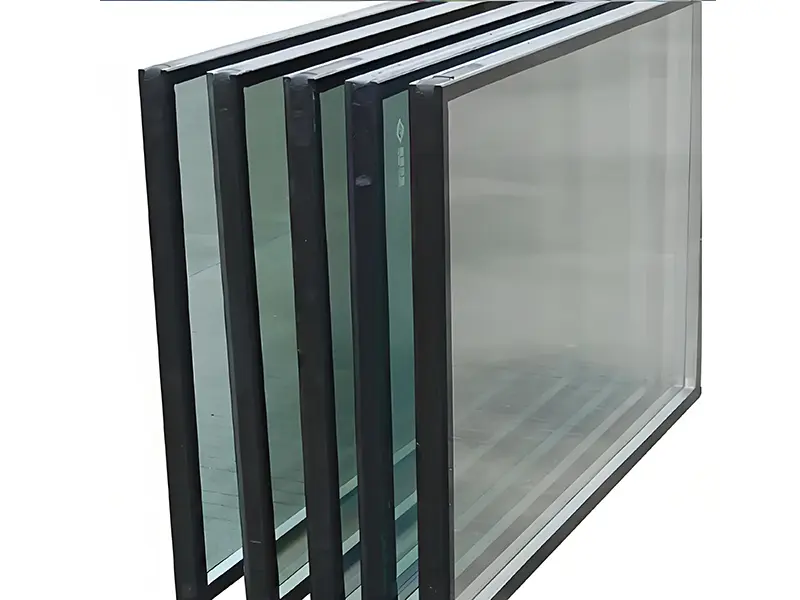
Vacuum insulated glass eliminates the gas fill entirely. A microscopic gap—just 0.1mm to 0.2mm—is evacuated to a near-vacuum below 0.1 Pa. Without gas molecules to transfer heat by conduction or convection, thermal transmittance plummets. A typical VIG unit achieves a U-value (thermal transmittance) of 0.4 to 0.8 W/m²K. A high-quality triple-pane double-glazing unit struggles to reach 0.7 W/m²K, and even then, it is 40mm to 50mm thick. Vacuum insulated glass achieves superior insulation at just 6mm to 8mm total thickness.
That thinness opens doors. Architects can retrofit historic single-glazed windows with VIG without altering original frames. Curtain wall systems gain higher insulation without increasing profile depth. For projects involving curved glass—where thermal performance has traditionally lagged due to the difficulty of gas-filling bent cavities—vacuum insulated glass offers a novel solution. Vacuum-sealed curved glass units are now emerging, using thin, flexible edge seals and support pillar arrays that adapt to moderate radii. This allows thermally superb curved insulating glass for building corners, domes, and feature facades where double-glazing would be too thick or thermally inefficient.
The Hidden Challenge: Support Pillars and Optical Distortion
No technology is without compromise. Because atmospheric pressure exerts roughly ten tonnes of force per square meter on a vacuum cavity, the two glass lites would collapse inward without a support structure. Vacuum insulated glass relies on an array of microscopic pillars—stainless steel or ceramic, typically 0.3mm to 0.5mm in diameter—spaced 20mm to 30mm apart. These pillars transmit mechanical load but also create point thermal bridges and visible optical distortions.
For most standard vision glazing at normal viewing distances, these pillars are barely noticeable. But for high-end decorative glass applications—etched, frosted, or digitally printed insulating glass intended to function as art or signage—pillar arrays can interrupt the visual field. Leading manufacturers have reduced pillar density and size to near-invisibility, but fully transparent decorative glass with vacuum insulation remains a niche. By contrast, double-glazing has no internal pillars, making it superior for museum display glazing, luxury retail, and high-clarity decorative glass with embedded interlayers or laminated films.
However, vacuum insulated glass excels where double-glazing fails in thinness and weight. For bullet proof glass applications, combining VIG with laminated ballistic interlayers is an active area of research. A conventional bullet resistant insulating glass assembly might weigh over 80 kg/m². A vacuum-insulated ballistic unit, using thinner glass lites and an evacuated cavity, could reduce weight by 40% while maintaining the same thermal performance—a game-changer for embassies, security lobbies, and high-risk residential towers.
Edge Seal Longevity: The Achilles' Heel of Vacuum Insulated Glass
The edge seal of any insulating glass product determines its lifespan. Double-glazing uses metal or warm-edge spacers with primary and secondary sealants (polyisobutylene and silicone or polysulfide). That system is mature, well-understood, and field-proven for 30-plus years.
Vacuum insulated glass requires a hermetic edge seal that maintains a vacuum for decades. Most VIG products use a soldered metal edge (often tin-based alloy) or a glass-frit bonded seal. These seals are robust but vulnerable to mechanical damage, thermal cycling, and moisture ingress over time. A microscopic leak ruins the vacuum, dropping thermal performance to worse than single glazing.
Field data from installations in Northern Europe and Japan—where VIG has been used since the early 2010s—shows promising but not yet definitive results. The failure rate for early VIG products was higher than double-glazing, though second-generation edge seals have improved dramatically. For insulating glass used in hurricane zones, high-wind coastal areas, or buildings subject to extreme thermal shock (dark-colored curved glass facades in direct sun), double-glazing remains the safer specification. Vacuum insulated glass has not yet achieved the same decades of real-world validation.

Curved Glass, Bullet Proof Glass, and Decorative Glass: Where VIG Wins and Where It Waits
Curved Glass: Vacuum insulated curved glass is technically feasible but expensive. Bending two glass lites to matching radii, then vacuum-sealing them with a flexible edge seal and maintaining uniform pillar contact, requires precision tooling. For now, most curved insulating glass remains double-glazed with gas fill. However, for small-radius curved glass in passive house projects, VIG is gaining ground.
Bullet Proof Glass: True ballistic-rated insulating glass is rarely required; most security glazing is laminated monolithic or double-glazed with a polycarbonate interlayer. Vacuum insulated bullet proof glass would require the evacuated cavity to survive blast shock without imploding. Testing is ongoing, but no certified VIG bullet proof glass exists today. Double-glazing with ballistic inner lite remains the proven solution.
Decorative Glass: This is where double-glazing retains an unassailable lead. Vacuum insulated glass cannot easily accommodate interlayers containing fabrics, foils, or natural materials. By contrast, decorative glass in double-glazing can include laminated digital prints, textured interlayers, or embedded LEDs. If your project demands decorative insulating glass with colorful back-painted spandrels or organic interlayers, double-glazing is the only practical choice. VIG works best with clean, minimally coated glass surfaces.
Cost and Manufacturing Reality
Vacuum insulated glass costs three to five times more per square meter than a premium double-glazing unit. The vacuum pump-down process, edge sealing, pillar placement, and clean-room assembly are capital-intensive. Only a handful of factories worldwide produce VIG at scale, while double-glazing lines exist in every major city.
However, as energy prices rise and building codes mandate lower U-values, the cost gap narrows. For net-zero buildings where every millimeter of wall thickness matters, or for retrofitting heritage windows where double-glazing won't fit, VIG is already cost-effective. Mass adoption will require automation and economies of scale.
Conclusion: Replacement or Specialization?
Vacuum insulated glass will not replace double-glazing units in the same way LED replaced incandescent bulbs. Rather, VIG will carve out high-value niches where thinness and thermal performance outweigh cost and optical compromises.
Double-glazing remains the workhorse for most residential, commercial, and institutional insulating glass applications—especially where decorative glass, curved glass, or certified bullet proof glass is required. Vacuum insulated glass excels in retrofit heritage windows, thin high-performance facades, and certain cold-climate passive house designs.
The two technologies will coexist for decades. But in the specific application where a building needs maximum insulation with minimum thickness—and where the glass is clear, flat, and free of decorative interlayers—vacuum insulated glass is not just an alternative. It is the superior solution. The question is no longer "Can it replace double-glazing?" but "Where should we specify vacuum insulated glass today?"